
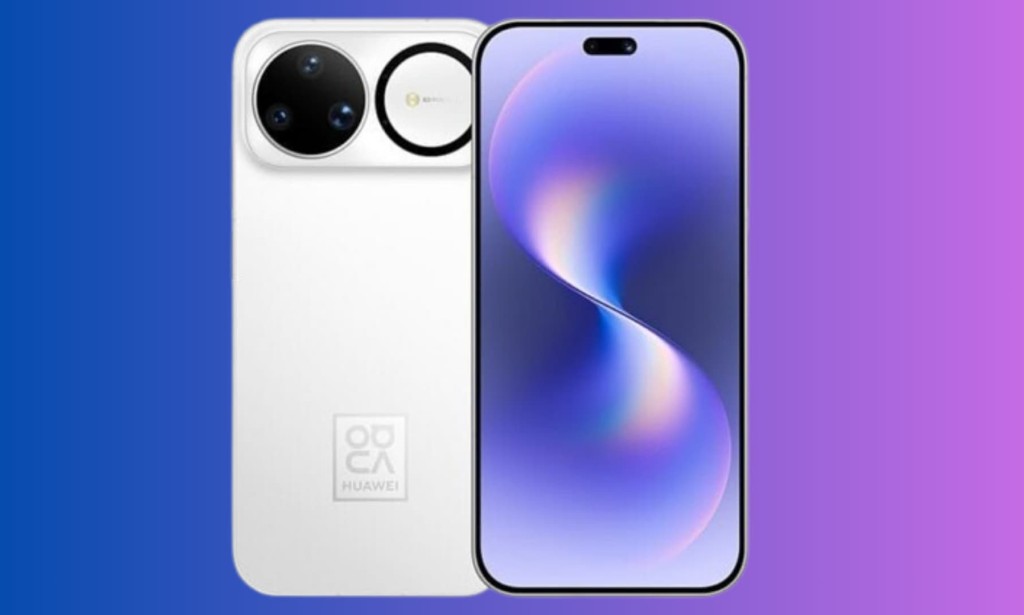
Huawei's latest flagship-tier Nova arrives with a 200MP camera, a 7000mAh battery, and a design that means business. Here's a complete breakdown of what the Nova 16 Ultra brings to the table.
Announced on June 1, 2026, and set to hit shelves on June 6, the Huawei Nova 16 Ultra is the brand's clearest statement yet that the Nova line isn't playing second fiddle to anyone. With a massive sensor array, a display that reaches 6000 nits of peak brightness, and a battery that can comfortably last two days for most users, this phone targets individuals who want a premium experience without necessarily opting for the Pura series.
Whether it delivers on that promise is a longer conversation but on paper, the specs are hard to dismiss.
Display: Big, Bright, and Built to Last
The Nova 16 Ultra features a 6.84-inch LTPO OLED panel with a resolution of 1320 x 2856 pixels, resulting in approximately 460 ppi. That's sharp enough that you'll never really think about pixel density it just looks clean.
The panel supports 1 billion colors, HDR Vivid, and a 120Hz adaptive refresh rate via LTPO, which means it scales down when you don't need the full rate and ramps up when you do. Battery-friendly and smooth at the same time.
What stands out is the 6000 nits peak brightness that's thewhich isof number that makes outdoor visibility a non-issue. The display also uses 2160Hz PWM dimming, which matters for people who are sensitive to screen flicker at low brightness levels. It's a detail that most brands skip over, and Huawei including it here says something about the attention to detail on this device.
For protection, Huawei has used Kunlun Glass the same toughened glass they've been putting on their Pura flagships.
Build & Design: Premium, Practical, and IP68/IP69
The Nova 16 Ultra measures 163 x 78 x 7.1mm and weighs 220 grams. At 7.1mm thick, it's impressively slim for a phone carrying a 7000mAh battery. The weight is on the heavier side, but that's expected at this screen size and battery capacity.
Build materials include a glass front (Kunlun Glass), an aluminum frame, and a glass or eco leather back depending on the variant. It's a dual-SIM device using two Nano-SIM slots.
The durability rating is strong: IP68 and IP69 certified, meaning it can handle dust, submersion up to 2 meters for 30 minutes, and even high-pressure water jets. That IP69 rating is still uncommon in smartphones it's genuinely useful protection, not just marketing.
Color options at launch are Black, White, and Blue.
Performance: Kirin 9010S Running HarmonyOS 6.1
Under the hood, the Nova 16 Ultra runs on the Kirin 9010S chipset paired with 12GB of RAM across all storage variants. Storage options come in 256GB, 512GB, and 1TB though there's no microSD slot, so what you pick at purchase is what you get.
The phone runs HarmonyOS 6.1, Huawei's in-house operating system. For users already in the Huawei ecosystem, this is familiar ground. For those coming from Android, the adjustment period is real but HarmonyOS has matured considerably over the past couple of years.
Camera System: 200MP Main Sensor and a Capable Triple Setup
The camera is where Huawei is making the loudest claim with the Nova 16 Ultra.
Main camera: 200MP, f/1.8, 23mm wide, with a 1/1.28" sensor, PDAF, and OIS. A sensor this size gathers a lot of light, and the wide aperture helps in low-light conditions. Combined with OIS, you're set up well for sharp shots in varied lighting.
Periscope telephoto: 50MP, f/2.2, 88mm, with PDAF, OIS, and 3.7x optical zoom. Periscope lenses in the telephoto position are now fairly standard at this tier, but the 50MP resolution here means you get detail even when cropping in further.
Ultrawide: 50MP, f/2.2, 13mm, 118° field of view, with autofocus. Having AF on the ultrawide is a nice touch it makes the lens usable for close-up shots too, not just landscape-wide frames.
Additional features include laser autofocus, a color spectrum sensor, LED flash, panorama, and HDR. Video goes up to 4K with gyro-EIS and HDR Vivid support on all three cameras. The same applies to the 50MP front camera (f/2.0, ultrawide, Dual Pixel PDAF) 4K video from the selfie camera is a solid inclusion.
Battery: 7000mAh with Fast Wired and Wireless Charging
The 7000mAh battery is one of the headline numbers here, and it's paired with a solid charging setup:
- 100W wired charging (SCP, UFCS, PD, PPS, QC compatible)
- 50W wireless charging
- 7.5W reverse wireless charging
- 5W reverse wired charging
100W wired means the phone goes from empty to full in well under an hour. 50W wireless is fast enough to be genuinely practical rather than a backup option. The reverse charging options are a useful bonus if you regularly charge accessories or earbuds wirelessly.
A 7000mAh battery at this form factor 7.1mm thin, 220g is an engineering achievement worth noting. Most phones in this weight class are working with significantly smaller cells.
Connectivity
The Nova 16 Ultra covers all the modern bases:
- 5G (SA/NSA), LTE, HSPA
- Wi-Fi 7 (802.11 a/b/g/n/ac/6/7), dual-band, Wi-Fi Direct
- Bluetooth 6.0 with L2HC support (320–960 kbps HD audio)
- NFC and Infrared port
- USB Type-C 2.0 with OTG
- Multi-system GNSS: GPS (L1+L5), BDS, GALILEO, QZSS, NavIC, GLONASS
No 3.5mm headphone jack, but stereo speakers are onboard. The Bluetooth 6.0 with L2HC codec is worth highlighting it's Huawei's high-quality audio codec that competes with LDAC and aptX HD at higher bitrates.
Pricing and Availability
The Nova 16 Ultra is priced at around $695. It's currently listed as a China-market device (model HIP-AL00), and global availability hasn't been confirmed. Given Huawei's current distribution situation in Western markets, international buyers may need to look at gray import options.
Quick Verdict
The Huawei Nova 16 Ultra is a phone that packs flagship-level specs into a surprisingly slim and light body. The 200MP main sensor, 7000mAh battery, IP68/IP69 rating, Kunlun Glass display, and Wi-Fi 7 support together make a strong case at the $695 price point assuming you're comfortable with HarmonyOS and don't need Google services.
For users already in Huawei's ecosystem, or those in markets where HarmonyOS isn't a dealbreaker, this is one of the more compelling options launching in mid-2026.eaker, this is one of the more compelling options launching in mid-2026.

You must be logged in to post a comment.