
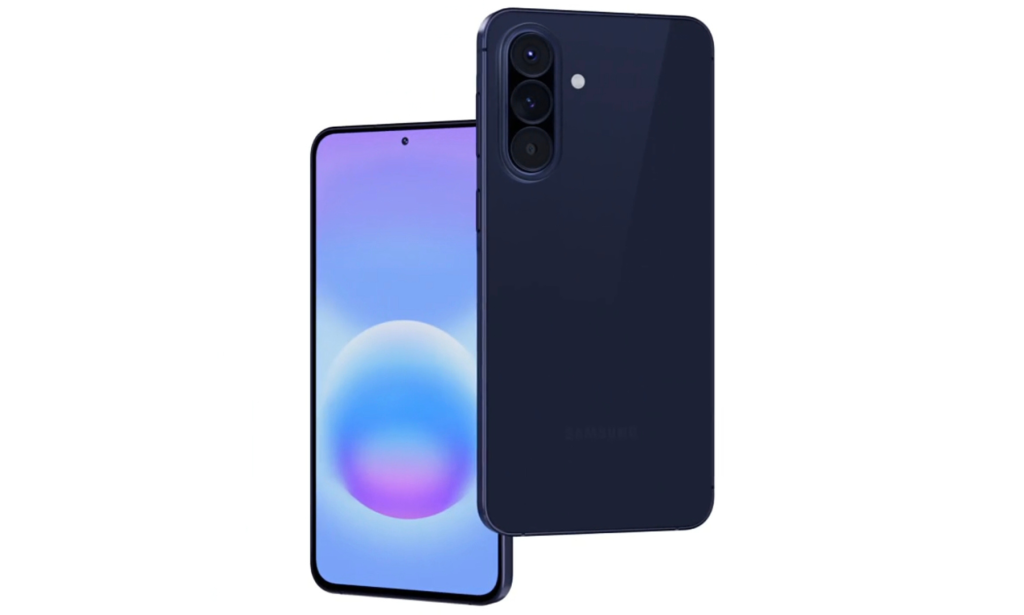
Samsung's Galaxy A series has long been the go-to recommendation for buyers who want a reliable Android experience without flagship prices. The Galaxy A57 5G continues that tradition in most ways but a $50 price hike over its predecessor, combined with hardware that is almost identical to last year's model, makes it a harder sell than it should be. Here is a complete breakdown of everything the Galaxy A57 5G offers, where it falls short, and whether it deserves a place in your pocket.
Design and Build Surprisingly Light for a Big Phone
The Galaxy A57 5G makes an immediately strong impression in the hand. Samsung has managed to shrink the physical dimensions of the phone while keeping the same 6.7-inch display and 5,000mAh battery as before. The result is a phone that measures just 6.9mm thick and weighs only 179 grams making it thinner and lighter than the Google Pixel 10a at 9mm and 183g, the Nothing Phone 4a Pro at 7.95mm and 210g, and the OnePlus 15R at 8.1mm and 213g. For a large-screen phone, that is a genuinely impressive achievement.
The flat sides and rounded corners give it a clean, modern look that feels consistent with the rest of Samsung's current lineup. The side and volume buttons sit within comfortable reach on the right side, though they feel slightly less tactile than ideal. The phone comes in four colors Navy, Gray, Icyblue, and Lilac but the glossy back panel on the Navy version attracts fingerprints and smudges noticeably, which cheapens the overall feel. Lighter colorways like Icyblue and Lilac are likely to mask this more effectively.
On the durability front, the A57 delivers where it counts. Both the front and back panels carry Gorilla Glass Victus+ protection, and the phone holds a full IP68 rating for dust and water resistance a premium-grade specification that many phones at this price still do not offer.
Display Big, Bright, and Slim-Bezel
The 6.7-inch Super AMOLED panel is one of the stronger selling points of the Galaxy A57. Running at a 2,340 x 1,080 resolution with a 120Hz refresh rate and HDR10+ support, it delivers vibrant colors and smooth scrolling that holds up well against the competition in this price bracket. The slim bezels give it a more premium look than similarly priced rivals, and the screen gets bright enough for comfortable outdoor use including navigation and photography.
The in-display fingerprint scanner is accurate registering a thumb with reliable consistency but it requires a deliberate press-and-hold rather than a quick tap to unlock. Compared to the fingerprint readers on devices like the OnePlus 15R or Samsung's own Galaxy S-series, it feels noticeably slower. It is functional, just not snappy.
Content consumption on this display is a genuinely enjoyable experience. The vibrancy and size combination makes it one of the better large-screen options available at this price, even if the highly reflective coating is a compromise in bright sunlight.
Performance Exynos 1680 With Marginal but Real Improvements
The Galaxy A57 runs on Samsung's in-house Exynos 1680 chipset, a step up from the Exynos 1580 found in the Galaxy A56. The CPU, GPU, and NPU improvements are modest and unlikely to register in everyday usage, but the new image signal processor is meaningfully better it extracts more detail and better color science from the same physical camera sensors that the A56 used. The Exynos 1680 also gains support for faster DDR5 RAM, which contributes to smoother multitasking.
US buyers are limited to 8GB of RAM with 128GB or 256GB storage options. International variants offer up to 12GB of RAM with 256GB or 512GB storage depending on the region. During day-to-day use streaming, social media, messaging, Google Maps navigation the A57 handled everything without any lag or stutter. The phone did warm up under sustained camera use in hot weather, though performance remained stable throughout.
Battery and Charging All-Day Endurance With Fast Top-Up
The 5,000mAh battery delivers reliable all-day endurance. Even with 8 to 10 hours of active screen time daily, the phone consistently had charge remaining by late evening. The more efficient Exynos 1680 chip appears to have improved stamina compared to the A56 despite the identical battery capacity.
Charging speed comes in at 45W wired the same rate as the Galaxy S26+ and actually faster than the Galaxy S26's maximum 25W charging speed. Going from 20% to a full charge takes roughly an hour, which is a reasonable turnaround for a phone in this price class. There is no wireless charging, which is worth noting.
Software One UI 8.5 With Six Years of Updates and Some Unwanted Extras
The Galaxy A57 ships with One UI 8.5 based on Android 16, and Samsung is committing to six years of guaranteed major OS upgrades. That is an exceptional software support promise for a mid-range device and one of the strongest arguments for choosing Samsung over competitors in this segment.
One UI itself is fluid, well-animated, and easy to navigate. The software experience is genuinely one of the A57's highlights with one consistent annoyance. Bloatware remains a problem. Pre-installed apps from Samsung, Microsoft, and Facebook come loaded on the device, and while most can be rejected during setup or uninstalled afterward, some slip through regardless. Most notably, Glance an AI-powered lock screen content feature repeatedly re-enabled itself and changed the lock screen wallpaper even after being turned off, which crosses a line from inconvenience into actively disrespecting user preferences.
On the AI side, both Google Gemini and Samsung Bixby are available as voice assistants. Gemini Live performed well in real-world tests, accurately identifying products and providing useful contextual information. Bixby, however, requires an internet connection to perform even basic local tasks like toggling dark mode a limitation that feels unnecessary and outdated.
Camera System Good Main Shooter, Weak Macro, No Telephoto
The Galaxy A57 carries a triple rear camera system consisting of a 50MP main camera, a 12MP ultrawide, and a 5MP macro lens. The front camera is a 12MP selfie shooter.
The main 50MP camera is the standout performer. It produces rich, well-saturated images with good dynamic range and solid detail retention. The improved ISP in the Exynos 1680 does extract noticeably better results from the same sensor hardware compared to the A56. The ultrawide camera also improved in color reproduction and detail over its predecessor, making it a more reliable option for wide-angle shots than before.
The 5MP macro camera is, frankly, not worth using in most situations. The results lack detail and the shallow depth of field is difficult to control. A more practical workaround is to shoot at 4x zoom in 50MP mode, which delivers far better close-up results with natural background blur.
The camera does occasionally struggle with consistency in challenging lighting conditions. Two shots taken within seconds of each other in direct sunlight can produce significantly different results one correctly processed and one with a blown-out background. This is not a Samsung-exclusive problem, as the same inconsistency appears across multiple Android devices, but it is worth being aware of.
The selfie camera produces natural, detailed results with accurate skin tone reproduction and avoids the excessive brightening that some competitor front cameras apply. Portrait mode on the main camera performs reliably for subject separation.
One omission that continues to frustrate is the absence of a telephoto lens. At $550, competing phones in the same bracket including the Nothing Phone 4a Pro manage to include a more versatile multi-lens setup. The lack of optical zoom remains a genuine gap in the A57's camera experience.
The Competition Problem What $550 Gets You Elsewhere
This is where the Galaxy A57 5G faces its most serious challenge. At a launch price of $550 for the base 8GB/128GB configuration, it is competing against some very compelling alternatives including Samsung's own devices.
The Galaxy A56, which launched just a year earlier with nearly identical hardware, is now available for under $400. The Galaxy S25 FE sits at $500 and brings a more versatile camera system alongside more powerful processing. The Google Pixel 10 is similarly priced at around $549 and offers a brighter display and flagship-grade AI capabilities. The Nothing Phone 4a Pro delivers a more complete camera setup and a more distinctive design at a comparable price.
The Galaxy A57 does edge out all of these alternatives on the combination of large screen size and comfortable hand feel no other phone in this group matches that specific pairing as well. But whether that justifies a $50 premium over the A56 for hardware improvements that are largely invisible in daily use is a genuine question.
The honest answer is that the Galaxy A57 will be a much smarter buy once it receives its inevitable first sale discount, which typically arrives within a few months of launch. At $450 or below, the balance shifts considerably in its favor.
The Samsung Galaxy A57 5G is a well-built, comfortable, and capable mid-range phone with excellent software support, a reliable main camera, and all-day battery life. It is also $50 more expensive than its predecessor for incremental improvements that most users will never notice. At full price, the competition from discounted 2025 phones including Samsung's own Galaxy S25 FE makes it a difficult recommendation. Wait for a price cut and it becomes one of the better large-screen Android options in its class.
Quick Specs:
Display: 6.7-inch Super AMOLED, 2340×1080, 120Hz, HDR10+
Chipset: Exynos 1680
RAM/Storage: 8GB/128GB or 8GB/256GB (US) | 12GB/256GB or 12GB/512GB (International)
Main Camera: 50MP | Ultrawide: 12MP | Macro: 5MP
Front Camera: 12MP
Battery: 5,000mAh | Charging: 45W wired
Software: One UI 8.5 (Android 16) | 6 years of OS updates
Build: Gorilla Glass Victus+ front and back | IP68
Price: $550 (US base model)
What We Liked:
- Exceptionally light and thin for a 6.7-inch phone
- Flagship-grade IP68 rating at mid-range price
- Six years of guaranteed OS updates
- 45W fast charging faster than Galaxy S26
- Smooth and fluid One UI 8.5 experience
- Natural selfie camera with accurate skin tones
What We Did Not Like:
- $50 more expensive than the Galaxy A56 for minimal upgrades
- Same camera sensors as last year no telephoto lens added
- 5MP macro camera is largely useless
- Glance bloatware reinstalls itself despite being disabled
- Fingerprint reader is slow compared to rivals
- Bixby needs internet for basic local commands
- Glossy back attracts fingerprints

You must be logged in to post a comment.