
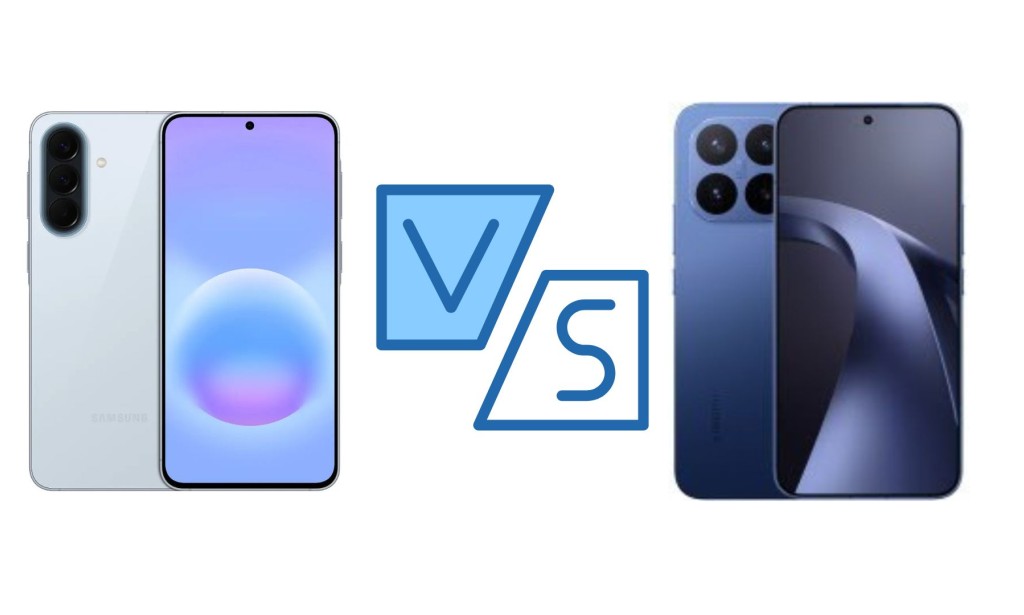
Samsung Galaxy A57 vs Xiaomi 17T Pro: Full Comparison 2026 Which One Should You Buy?
Two of the most exciting Android phones of 2026 have landed within weeks of each other, and they could not be more different. The Samsung Galaxy A57 5G launched on April 10, 2026 as Samsung's most powerful mid-range phone ever made. The Xiaomi 17T Pro officially launched on May 28, 2026 as Xiaomi's earliest T-series global debut in history. One costs $549. The other starts at $1,170 in Europe.
But price alone does not tell the full story. The Xiaomi 17T Pro brings flagship-level hardware that directly challenges phones twice its price. The Samsung Galaxy A57 brings six years of software support, Samsung's trusted One UI experience, and AI tools that punch well above its price point.
So which one should you actually buy? Here is the most detailed side-by-side comparison of the Samsung Galaxy A57 versus the Xiaomi 17T Pro in 2026.
QUICK SPECS COMPARISON
Feature — Samsung Galaxy A57 5G — Xiaomi 17T Pro
Launch Date — April 10, 2026 — May 28, 2026
Price — $549 (128GB) / $610 (256GB) — €999 (~$1,170) for 512GB
Display — 6.7-inch Super AMOLED Plus, 120Hz — 6.83-inch OLED, 144Hz
Resolution — 2340x1080 (FHD+) — 2772x1280 (1.5K+)
Processor — Exynos 1680 (4nm) — MediaTek Dimensity 9500
RAM — 8GB / 12GB — 12GB
Storage — 128GB / 256GB — 256GB / 512GB / 1TB
Main Camera — 50MP, f/1.8 — 50MP Leica Light Fusion 950
Ultra-wide Camera — 13MP — 50MP Leica
Telephoto Camera — 5MP macro — 5x optical zoom telephoto
Front Camera — 12MP — 32MP
Battery — 5,000mAh — 7,000mAh
Wired Charging — 45W — 100W
Wireless Charging — No — 50W
Water Resistance — IP67 — IP69
Software — Android 16, One UI 8.5 — Android 16, HyperOS 3
Software Support — 6 years OS + security — 3 years OS
Weight — 179g — 219g
Thickness — 6.9mm — 8.3mm
DESIGN AND BUILD QUALITY
The Samsung Galaxy A57 is one of the slimmest mid-range phones available in 2026. At just 6.9mm thick and weighing only 179 grams, it feels noticeably lighter and more comfortable in hand than most phones in its class. The body features a Corning Gorilla Glass Victus Plus rear panel with an aluminum frame, giving it a premium feel that belies its $549 price tag. It is available in four colors: Awesome Navy, Awesome Grey, Awesome Icyblue, and Awesome Lilac.
The Xiaomi 17T Pro is noticeably heavier and thicker at 219 grams and 8.3mm. This extra mass is largely a result of the massive 7,000mAh silicon-carbon battery packed inside. The build uses a metal frame and comes in Black, Dark Blue, and Dark Pink color options. It feels solid and substantial in the hand, but it is definitely not a one-handed phone for most people.
On water resistance, the Xiaomi 17T Pro wins clearly. It carries an IP69 rating, which means it can withstand high-pressure water jets and even brief submersion at higher temperatures. The Galaxy A57 has an IP67 rating, which covers dust protection and submersion up to one meter for 30 minutes. Both are fully splash and rain resistant, but the 17T Pro goes further.
Design winner: Samsung Galaxy A57 for everyday comfort. Xiaomi 17T Pro for durability.
DISPLAY: SMOOTH VS SHARPER
The Samsung Galaxy A57 features a 6.7-inch Super AMOLED Plus panel with a 120Hz refresh rate, FHD+ resolution at 2340x1080 pixels, and Vision Booster technology for improved outdoor visibility. Samsung's AMOLED panels are renowned for their deep blacks, vibrant colors, and excellent sunlight readability, and the A57 continues that tradition. Peak brightness reaches 1,900 nits, making it one of the brightest displays at this price point.
The Xiaomi 17T Pro steps up to a 6.83-inch OLED panel with a faster 144Hz refresh rate and a sharper 2772x1280 pixel resolution. The higher refresh rate makes scrolling and animations feel marginally smoother, and the higher resolution is noticeable when viewing detailed content, reading text, or watching high-resolution video. The 17T Pro display is genuinely flagship-class.
In real-world daily use, both displays are excellent. The Galaxy A57 will satisfy the vast majority of users. The 17T Pro's 144Hz and higher resolution will be appreciated by those who use their phone for gaming or consume a lot of media content.
Display winner: Xiaomi 17T Pro for resolution and refresh rate. Samsung Galaxy A57 for brightness and color accuracy at this price.
PERFORMANCE: EXYNOS 1680 VS DIMENSITY 9500
This is where the two phones are most clearly separated by their market positioning.
The Samsung Galaxy A57 runs on the Exynos 1680 processor built on a 4nm process. The chip features a tri-cluster CPU configuration with cores running at 2.9GHz, 2.6GHz, and 1.95GHz. It also includes an upgraded NPU for handling Samsung's AI-powered Awesome Intelligence features. This chip delivers smooth and responsive day-to-day performance for tasks like browsing, social media, streaming, photography, and light gaming. It is not a chip designed for heavy gaming or sustained peak performance tasks, but for its intended audience and price point, it performs excellently.
The Xiaomi 17T Pro uses the MediaTek Dimensity 9500, which is a genuine 2026 flagship processor. This chip competes directly with the Qualcomm Snapdragon 8 Elite and offers class-leading performance in CPU tasks, GPU gaming, and AI processing. For demanding users who play graphics-intensive games, run AI applications, or multitask heavily, the Dimensity 9500 provides a dramatically more powerful experience.
In benchmarks, the Dimensity 9500 is expected to be roughly two to two and a half times faster than the Exynos 1680 in sustained performance tasks. This performance gap is real and significant for power users.
Performance winner: Xiaomi 17T Pro by a large margin.
CAMERA: NIGHTOGRAPHY VS LEICA LIGHT FUSION
Camera is one of the most important battlegrounds between these two phones, and both take very different approaches.
The Samsung Galaxy A57 uses a triple rear camera system with a 50MP main sensor, 13MP ultra-wide, and 5MP macro camera. Samsung has equipped the A57 with Nightography technology, which uses improved ISP processing, faster shutter speed, and enhanced noise reduction to deliver cleaner low-light photos than the A56. The Auto Trim feature for video editing is also a practical addition. The 12MP front camera takes clean selfies with natural skin tones. For most everyday photography needs including family photos, travel, food, and social media content, the Galaxy A57 camera is genuinely excellent.
The Xiaomi 17T Pro uses a Leica-tuned triple camera system headlined by the 50MP Light Fusion 950 primary sensor, one of the best camera sensors available in any smartphone in 2026. The ultra-wide camera is a full 50MP, which is dramatically better than the A57's 13MP ultra-wide. The telephoto camera offers 5x true optical zoom, which is a feature the Galaxy A57 completely lacks, offering only a 5MP macro camera instead. The front camera is a 32MP sensor, nearly three times the resolution of the A57's 12MP selfie camera.
The Leica collaboration brings genuine photographic expertise to the 17T Pro, including Leica color science, Summilux lens profiles, and both Leica Authentic and Leica Vibrant color modes for different shooting styles.
For pure camera capability, the Xiaomi 17T Pro is in a different league. But for most casual photographers, the Galaxy A57 will take very good photos without any extra thought required.
Camera winner: Xiaomi 17T Pro by a significant margin, especially in zoom and ultra-wide.
BATTERY AND CHARGING: THE BIGGEST DIFFERENCE
This is arguably the most dramatic difference between these two phones.
The Samsung Galaxy A57 carries a 5,000mAh battery with 45W wired fast charging. There is no wireless charging support, which is a notable omission at this price point. The 5,000mAh battery is standard for the mid-range segment and will comfortably last a full day of moderate to heavy use for most people.
The Xiaomi 17T Pro has a massive 7,000mAh silicon-carbon battery, which is 40 percent larger than the A57's battery. Silicon-carbon battery technology allows for higher energy density in a smaller physical space, which is why Xiaomi can fit 7,000mAh into a phone that, while heavy, is not unreasonably large. This battery should comfortably last two full days for most users and potentially three days with light usage. The phone also charges at 100W wired, meaning a full charge from zero to 100 percent takes approximately 35 minutes. Wireless charging is supported at 50W, which is also faster than most wireless chargers in the market.
The Galaxy A57's 45W charging is adequate but not particularly impressive in 2026. The 17T Pro's combination of a 7,000mAh battery and 100W charging is one of the strongest battery packages on any phone at any price right now.
Battery winner: Xiaomi 17T Pro, and it is not close.
SOFTWARE AND LONG-TERM SUPPORT
This is the most important category for buyers who plan to keep their phone for several years, and this is where the Samsung Galaxy A57 has its single biggest advantage over the Xiaomi 17T Pro.
The Samsung Galaxy A57 launches with Android 16 and One UI 8.5 and comes with Samsung's commitment of six years of OS updates and six years of security patches. This means a Galaxy A57 purchased in 2026 will still receive full software support through 2032. This is an industry-leading commitment for a mid-range phone and represents outstanding long-term value.
The Xiaomi 17T Pro also launches with Android 16 and HyperOS 3, Xiaomi's latest software platform. However, Xiaomi's update policy for the 17T Pro offers three years of OS updates and four years of security patches. This is decent by most Android standards but significantly shorter than what Samsung is offering on the A57, which costs less than half the price.
For users who hold onto their phones for three or more years, the Galaxy A57's software commitment is a major practical advantage.
Software winner: Samsung Galaxy A57 by a wide margin.
SAMSUNG GALAXY A57 AI FEATURES
One of the Galaxy A57's strongest selling points is how much of Samsung's Awesome Intelligence platform it receives. Key AI features include:
Circle to Search: Draw a circle around anything on your screen to instantly search for it on Google.
Live Translate: Real-time translation during phone calls in multiple languages.
Chat Assist: AI writing suggestions in messaging apps.
Photo Assist: AI-powered photo editing including object removal, background replacement, and shadow removal.
Interpreter Mode: Real-time two-way translation for face-to-face conversations.
Transcript Assist: Automatic transcription and summarization of voice recordings.
These features were previously exclusive to Samsung flagships and are now available on a $549 mid-range phone.
XIAOMI 17T PRO AI AND GAMING FEATURES
The Xiaomi 17T Pro's AI features are powered by the Dimensity 9500's superior NPU and include:
HyperOS AI Notes: Automatic summarization of notes, documents, and voice recordings.
AI Portrait Studio: On-device AI image generation for creating stylized portraits.
AI Image Expansion: Intelligently extend photos beyond their original edges.
Game Turbo 8.0: Advanced gaming optimization with frame interpolation and real-time performance monitoring.
Xiaomi AI Search: Context-aware search across all apps and content on the device.
The Dimensity 9500's more powerful NPU means on-device AI processing is faster and more capable on the 17T Pro, particularly for generative AI tasks.
PRICE COMPARISON: IS THE 17T PRO WORTH THE PREMIUM?
Samsung Galaxy A57 5G:
128GB model: $549.99
256GB model: $609.99
Xiaomi 17T Pro:
12GB plus 512GB: €999 (approximately $1,170)
12GB plus 256GB: pricing varies by market
The Xiaomi 17T Pro costs more than double the Galaxy A57 in most markets. Whether this premium is justified depends entirely on what you value in a smartphone.
You are paying more for the 17T Pro's Dimensity 9500 flagship processor, 7,000mAh battery with 100W charging, Leica Light Fusion 950 camera system with 5x optical zoom, 50MP ultra-wide camera, 144Hz higher resolution display, IP69 water resistance, and up to 1TB storage.
You are paying less for the A57's six years of software updates, lighter and slimmer design, Samsung's trusted One UI experience, and a more affordable entry point.
If budget is your primary concern, the Galaxy A57 is the clear choice. If you want the closest thing to a true flagship experience without paying flagship prices, the Xiaomi 17T Pro is exceptional value despite costing more.
WHO SHOULD BUY THE SAMSUNG GALAXY A57?
The Galaxy A57 is ideal for you if you want a reliable, slim, and comfortable everyday phone, you value long-term software support above everything else, you are a Samsung ecosystem user, you want solid AI features without paying flagship prices, you have a budget of around $550, and you do not need advanced zoom or ultra-wide camera performance.
WHO SHOULD BUY THE XIAOMI 17T PRO?
The Xiaomi 17T Pro is ideal for you if you want the strongest possible performance for gaming and heavy multitasking, you are a heavy media consumer who values display quality and battery life above all else, you are a photography enthusiast who wants Leica-quality cameras with proper optical zoom, you can live with shorter software support of three years, and you are willing to spend around $1,000 to $1,200 for a near-flagship experience.

You must be logged in to post a comment.