
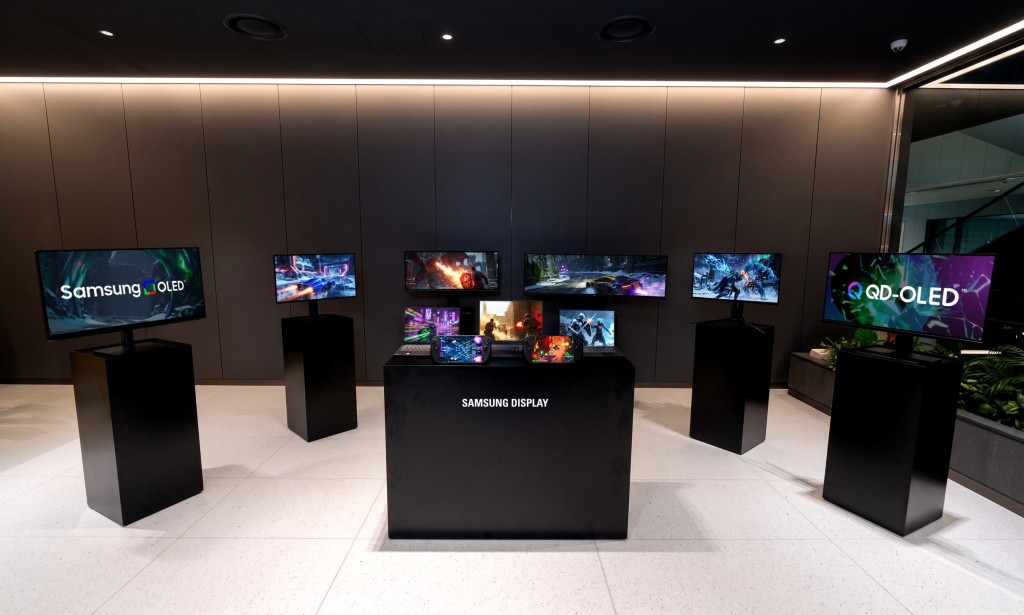
Samsung Display showed up to Computex 2026 with one of the most significant gaming display announcements in recent memory. On June 1, the company unveiled a full lineup of 16 new gaming OLED products spanning screens from 8.8 inches to 49 inches covering handheld gaming PCs, laptops, and desktop monitors. The headline is the world's first QD-OLED panel to run 4K resolution and 360Hz refresh rate simultaneously, but the rest of the lineup deserves attention too.
The Problem Samsung Just Solved
Anyone who has shopped for a premium gaming monitor over the past two years knows the frustration. Every display maker forced the same compromise: choose 4K resolution and accept a 240Hz ceiling, or choose 360Hz and drop to 1440p. The physics of driving that many pixels that many times per second pushed the limits of what panel circuitry and driving systems could handle. No one had cracked it until now.
Samsung Display achieved the 4K 360Hz combination through optimized panel circuitry and an entirely redesigned driving system capable of handling the substantially higher volume of pixel data that this specification demands. The result is a 31.5-inch QD-OLED panel that does what no other display has done before.
The 4K 360Hz QD-OLED Panel What It Actually Delivers
The panel runs at 3840 x 2160 resolution at a native 360Hz. At 360Hz, the frame interval drops to approximately 2.8 milliseconds a 50 percent improvement in frame cadence over current 240Hz panels. For competitive gaming, that difference in how quickly the monitor can render successive frames is meaningful and measurable.
The panel is built on Samsung's latest Penta Tandem QD-OLED technology, a five-layer OLED structure that delivers higher brightness than previous QD-OLED generations. It carries VESA DisplayHDR True Black 600 certification, which requires 600 nits of sustained brightness while maintaining black levels at 0.0005 nits or lower. This is a step above the True Black 400 and True Black 500 ratings found on currently available premium OLED gaming monitors.
The subpixel layout has also changed. Previous generations of Samsung QD-OLED used a triangular RGB arrangement that produced some text fringing and reduced sharpness on fine text. The new panel uses a V-stripe vertical RGB layout, which aligns subpixels in conventional columns and delivers sharper text edges. This makes the panel substantially more practical for users who split time between gaming and work like coding, document editing, and design.
Dual Mode 680Hz at Full HD
Beyond the 4K 360Hz native specification, the panel includes a dual mode that switches to Full HD resolution and pushes the refresh rate to 680Hz. This is the first QD-OLED panel to offer dual-mode functionality at all, and 680Hz places it firmly in the territory of dedicated esports displays that currently require separate lower-resolution panels to achieve comparable frame rates. Users who play competitive titles at maximum settings can switch modes without changing monitors.
Who Is Making Monitors With This Panel
Samsung Display confirmed it is in discussions with more than ten global monitor manufacturers for supply of the new panel. MSI has already confirmed a monitor built on it the MPG OLED 322URDX36 as a Computex announcement. ASUS is expected to follow. Finished consumer monitors are expected on shelves by Q4 with pricing likely above $1,000 given the panel's specification tier.
Ultra Slim Laptop OLED The Other Major Announcement
The 4K 360Hz monitor panel drew most of the attention, but Samsung Display's Ultra Slim laptop OLED is equally significant for a different audience. The new laptop panel reduces module outer-edge thickness by more than 20 percent compared to Samsung's current mass-production laptop OLED panels while maintaining the same picture quality, response times, and color performance. For gaming laptop manufacturers trying to build thinner and lighter machines without sacrificing display quality, this panel directly addresses the engineering challenge that has kept gaming laptops bulkier than users would prefer.
Refresh rate options on the Ultra Slim panel span from 165Hz up to 240Hz, covering the full range of gaming laptop display configurations currently in demand.
Handheld Gaming OLED The Smallest Screens in the Lineup
Samsung Display also brought handheld gaming display panels to Computex, covering the 8.8-inch form factor used by devices like the ASUS ROG Ally and Lenovo Legion Go. The handheld panels use OLED technology to deliver true black levels, fast response times, and accurate color in a compact format suited to portable gaming. The inclusion of handheld panels in Samsung's Computex lineup signals a deliberate push into a segment that has grown significantly over the past two years and shows no signs of slowing.
The Full Picture
Samsung Display's Computex lineup spans every major gaming display category simultaneously. From 8.8-inch handheld screens to 49-inch ultrawide monitors, the company is positioning OLED technology as the default choice across all of them. The 4K 360Hz panel resolves the single biggest remaining complaint about high-performance gaming monitors. The Ultra Slim laptop panel removes a key barrier to thinner gaming laptops. And the inclusion of handheld panels signals Samsung's intent to supply the components for whatever form gaming takes next.
Mass production for the 4K 360Hz QD-OLED panel is confirmed for the second half of this year. If the schedule holds, monitors built on it will be available before the end of the year.

You must be logged in to post a comment.