
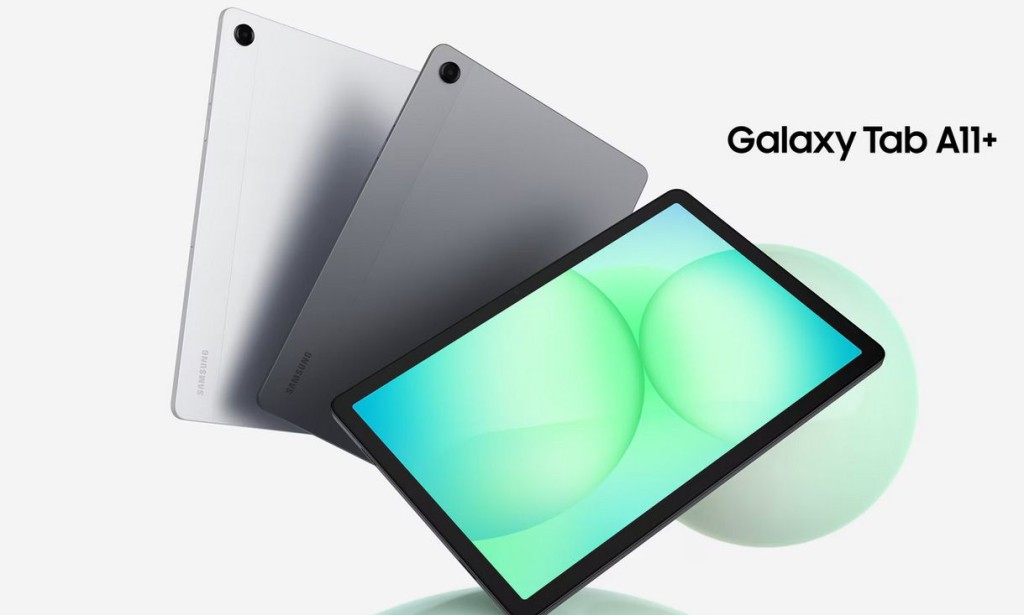
Samsung skipped the Tab A10 entirely, disappeared from the budget tablet market for two full years, and came back with the Galaxy Tab A11 Plus. If you were expecting a meaningful generational leap, the Tab A11 Plus will disappoint you. If you just want the best tablet available under $250, it will probably serve you well for years.
Design: Nothing Has Changed, and That Is the Problem
The Galaxy Tab A11 Plus measures 257.1 x 168.7 x 6.9mm identical to the Galaxy Tab A9 Plus from 2024, down to the millimeter. It is a few grams lighter, but that is the extent of any physical evolution. The matte metallic chassis, the single camera bump on the back, the flat edges all of it is exactly what you remember from two years ago. It only comes in a single Gray color, which says everything you need to know about how much creative energy went into the design this time around.
That said, the build quality is solid and the tablet does not feel cheap to handle. A 3.5mm headphone jack is present, there is a dedicated microSD card slot, and the 5G variant includes a physical SIM tray. On the security side, there is no physical fingerprint scanner only 2D face unlock, which proved unreliable in testing unless lighting conditions were ideal. Most users will end up using a PIN instead. There are no pogo pins, which means no official Samsung keyboard case is coming for this model.
Display: The One Thing Samsung Should Have Fixed
The display is where the Tab A11 Plus falls furthest behind expectations. It is an 11-inch TFT LCD panel running at 1920 x 1200 resolution with a 90Hz refresh rate, and TFT is the key word here. Almost every competing device at this price has moved to IPS, which delivers wider viewing angles and better color reproduction. The Tab A11 Plus has not made that move.
The difference becomes apparent the moment you tilt the screen even slightly off-center. Colors wash out toward the edges, contrast drops noticeably, and content that should look warm and vivid comes across duller than it should. After a few days of use you do adjust, and keeping the brightness cranked up at the 480 nits maximum does give you a reasonably watchable picture for general use. But for a tablet that will primarily be used for streaming video and media consumption, the panel is a consistent reminder of what was not upgraded.
The cover glass is also highly reflective, creating glare problems under indoor overhead lighting and making outdoor use difficult. The quad-speaker setup is loud enough for gaming and casual YouTube viewing, but lacks the low-end depth to make movies feel genuinely satisfying.
Performance: The Best Part of the Whole Package
The MediaTek Dimensity 7300 chipset is easily the most impressive thing about the Tab A11 Plus. Built on a 4nm process with 5G support, it is one of the best processors available in any budget Android tablet right now. In benchmark testing, the Tab A11 Plus matches the OnePlus Pad Go 2 on performance scores and the OnePlus tablet costs nearly $100 more.
Day-to-day, apps open at a reasonable pace and One UI runs well on the 6GB of RAM in the 5G configuration. Occasional stutters appear when switching between multiple heavy apps simultaneously, but nothing that seriously disrupts the experience. Gaming holds up well for casual and mid-tier titles PUBG Mobile runs at a smooth 60fps on the lowest graphics settings. The 8GB/256GB Wi-Fi configuration is also available for users who want more storage headroom without the cellular premium.
Software: Seven Years of Updates Is a Genuine Differentiator
The Tab A11 Plus ships with One UI 8 based on Android 16, and Samsung is committing to seven years of software and security updates. At this price point, no other manufacturer comes anywhere close to that promise, and it is one of the strongest arguments for choosing this tablet over anything else in the sub-$250 segment.
The One UI experience on a tablet is feature-rich and familiar to anyone who has used a recent Galaxy device. Split-screen multitasking, pop-up windows, and Samsung DeX mode running directly on the tablet screen are all present. Samsung's ecosystem integration is also genuinely useful the tablet automatically detected and connected Galaxy Buds 3 Pro within seconds of opening the case, and Quick Share made file transfers between Samsung devices seamless.
Galaxy AI is absent. There is no AI image editing, writing assistance, or AI wallpaper generation. Circle to Search and Gemini as the default assistant are both available, including the ability to share your screen with Gemini for contextual help.
Battery and Charging: Reliable, Not Remarkable
The 7,040mAh battery is unchanged from the Tab A9 Plus, but it delivers two to three days of use under mixed daily conditions with five to six hours of screen-on time. For a weekend trip, leaving the charger at home is a reasonable option.
Charging speed has been bumped up to 25W, which fills from empty to full in just over 90 minutes. A 30-minute charge delivers approximately 40% battery. A USB-C cable comes in the box, but no wall adapter is included.
The camera system is strictly functional. The 8MP rear camera produces acceptable results for document scanning. The 5MP front camera handles video calls without embarrassing itself. Neither is worth treating as a photography tool.
Should You Buy the Samsung Galaxy Tab A11 Plus?
At $249.99, the Tab A11 Plus is a defensible choice for anyone who needs a reliable daily-use Android tablet with cellular connectivity options and long-term software support. The Dimensity 7300 chipset keeps performance well above what the price suggests, and seven years of updates gives the device a longer useful life than almost anything competing at this price.
The TFT display is the one area where Samsung made a choice that genuinely hurts the recommendation. Upgrading to IPS would have made this a much cleaner buy for most people. If your primary use case is streaming and media consumption, that panel will frustrate you.
The value case improves significantly at lower prices. The Tab A11 Plus has already been discounted to around $200 at several retailers, and at that price the display compromise becomes considerably easier to accept. If the price drops below $200, it becomes one of the best buys in the budget tablet market.
For buyers who want a better media experience and are comfortable without cellular connectivity, the Lenovo Tab Plus at around $272 offers an IPS display with better speakers. The OnePlus Pad Go 2 at $399 adds stylus support and a brighter display but drops 5G and Samsung's update policy. For a more complete Samsung experience with S Pen support, hunting down a discounted Galaxy Tab S10 FE or Tab S10 Lite is worth the extra investment.
What We Liked:
Dimensity 7300 chipset that outperforms its price, seven years of guaranteed software updates, 25W fast charging, optional 5G connectivity across all major US carriers, reliable Samsung ecosystem integration.
What We Did Not Like:
Outdated TFT display that should have been replaced, no physical fingerprint scanner, no S Pen support, no wall adapter included in the box, no pogo pin connector for official keyboard case.

You must be logged in to post a comment.