
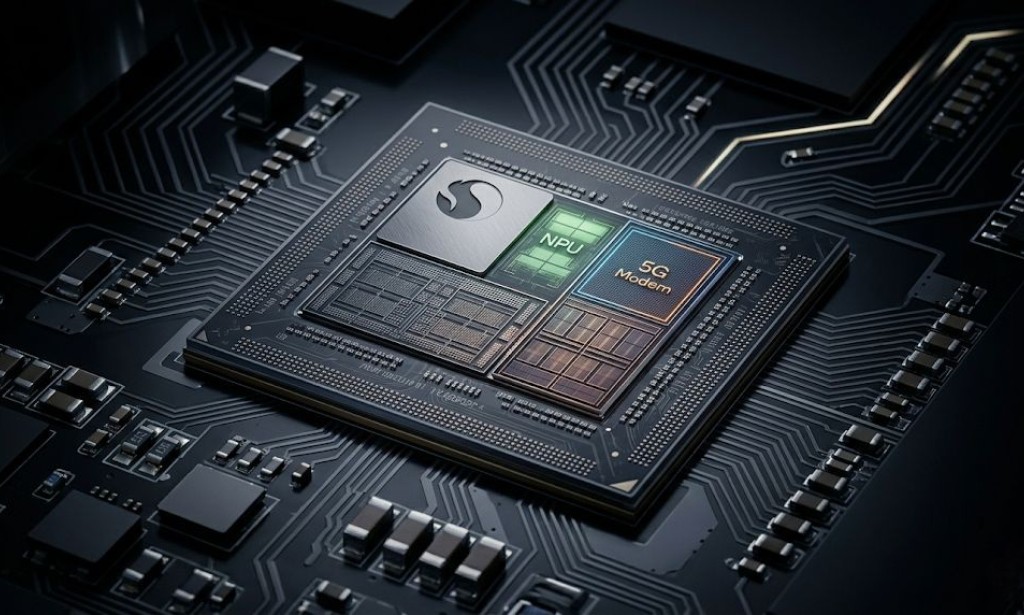
Galaxy S27 Chip War, Why Qualcomm May Win More Ground Despite Samsung's Exynos 2700 push. Samsung had one clear mission heading into the Galaxy S27 cycle, reduce its dependence on Qualcomm. After spending an estimated 3 trillion Korean won, roughly $2 billion to $3 billion, on Qualcomm's Snapdragon 8 Elite chips for the Galaxy S25 series, the Korean manufacturer made it a strategic priority to lean harder on its own silicon. The Exynos 2700 was supposed to be the answer, with reports earlier this year pointing to a 50 percent adoption target across all Galaxy S27 shipments.
But according to a new report from Weibo tipster Smart Chip Insider, those plans may not play out the way Samsung hoped. Qualcomm could once again command a higher share of chips inside the Galaxy S27 lineup, and the reason comes down to a pricing strategy that Samsung's in-house chip division simply cannot match right now.
HOW SAMSUNG GOT INTO THIS POSITION
To understand where things stand today, it helps to trace how Samsung arrived at this point.
For the Galaxy S25 series in early 2025, Samsung made the decision to use Qualcomm's Snapdragon 8 Elite exclusively across all global models. There was no Exynos option. The reasoning at the time was that the Exynos 2500 had failed to reach acceptable yield rates during production, leaving Samsung with no viable in-house alternative. The company was essentially forced to purchase Snapdragon chips at scale, and the bill came to an estimated 3 trillion KRW.
That financial hit became the catalyst for everything that followed. Samsung redoubled its investment in its own semiconductor division and pushed the Exynos 2600 to market in time for the Galaxy S26 series. The Exynos 2600 made history as one of the first consumer smartphone chipsets manufactured on a 2nm GAA process node, a genuine technical achievement that Samsung used as proof its chip division had turned a corner.
However, the initial rollout was deliberately cautious. The Exynos 2600 ended up in only around 25 percent of Galaxy S26 units worldwide, with the Snapdragon 8 Elite Gen 5 still powering the remaining 75 percent. Samsung wanted to rebuild market confidence in its silicon gradually rather than risk a large-scale rollout of a chip that still had questions around yield consistency.
The plan for Galaxy S27 was to take that 25 percent share and double it to 50 percent using the next-generation Exynos 2700. Analysts at Kiwoom Securities backed this target, pointing to Samsung's improving 2nm GAA yields and its strong motivation to cut chip procurement costs ahead of the S27 launch in early 2027.
THE NEW REPORT: QUALCOMM PUSHES BACK
The latest intelligence from Smart Chip Insider on Weibo complicates that narrative. According to the report, Qualcomm has found a way to make the Galaxy S27 design win harder for Samsung to walk away from, and it is not about raw performance. It is about price.
Qualcomm is expected to offer two versions of its next flagship chip for the Galaxy S27 cycle. The higher-tier variant, referred to as the Snapdragon 8 Elite Gen 6 Pro, is set to be manufactured on TSMC's second-generation 2nm N2P process node and will be aimed at the Galaxy S27 Ultra and other premium configurations. The standard variant, the Snapdragon 8 Elite Gen 6, will use a less expensive manufacturing process, allowing Qualcomm to offer it to Samsung at a significantly lower price point.
This two-tier strategy gives Qualcomm a lever it did not have in previous cycles. By pricing the standard Snapdragon 8 Elite Gen 6 competitively enough to undercut the cost of using Exynos 2700 in the base Galaxy S27 models, Qualcomm makes it financially rational for Samsung to keep using its chips in a larger portion of the lineup than originally planned.
Samsung, by contrast, only has one version of the Exynos 2700. There is no binned or cost-reduced variant that the company can deploy in its base model to match Qualcomm's pricing flexibility. This means that for the standard Galaxy S27, Samsung faces a genuine cost dilemma: use the Exynos 2700 at full manufacturing cost, or take the Snapdragon 8 Elite Gen 6 at the competitive price Qualcomm is reportedly offering.
For a company that just absorbed a multi-billion dollar chip procurement loss and is under intense pressure to protect margins, the financially sensible choice may be Qualcomm's chip, even if it means delaying the Exynos expansion timeline.
THE TSMC FACTOR: A MANUFACTURING GAP SAMSUNG CANNOT IGNORE
Beyond pricing, there is a second structural challenge facing the Exynos 2700 that the report highlights.
TSMC's 2nm N2P process, which will be used for the Snapdragon 8 Elite Gen 6 Pro, is widely regarded in the semiconductor industry as a more mature and higher-performing node than Samsung's own second-generation 2nm GAA process, known internally as SF2P. TSMC has more experience operating at this node and has achieved stronger yield consistency and power efficiency metrics.
This means the Snapdragon 8 Elite Gen 6 Pro is likely to enter the market with a performance and efficiency advantage over the Exynos 2700, at least in initial benchmarks. For Samsung's flagship Ultra model, where performance expectations are highest and customer tolerance for compromise is lowest, choosing Qualcomm's top chip remains the safer decision from a reputation standpoint.
The Exynos 2700 does not need to be faster than the Snapdragon 8 Elite Gen 6 Pro to justify its existence. As one analyst noted, even a marginally slower but more efficient Exynos chip can generate significant positive attention for Samsung's semiconductor ambitions and help reduce reliance on external suppliers over time. But in the short term, the performance gap between TSMC's mature 2nm node and Samsung's newer SF2P node is a real disadvantage that will influence how broadly the Exynos 2700 can be deployed without damaging the Galaxy S27's competitive positioning.
WHAT THIS MEANS FOR THE GALAXY S27 LINEUP
Putting the pricing dynamics and manufacturing gap together, the most likely scenario for the Galaxy S27 series chip distribution looks something like this.
Galaxy S27 Ultra: Almost certainly powered by the Snapdragon 8 Elite Gen 6 Pro on TSMC's N2P node. This is the flagship model where Qualcomm's top chip makes the most sense, and Samsung is unlikely to risk its premium reputation with an unproven Exynos variant in the most expensive device in the lineup.
Galaxy S27 Plus: A split is possible here, but the Snapdragon 8 Elite Gen 6 at its competitive pricing makes it a strong candidate for a larger share than originally anticipated.
Galaxy S27 base model: This is where the Exynos 2700 has its best shot at meaningful deployment. Samsung will want to use its own chip somewhere in the lineup to justify the investment and demonstrate progress, and the base model is the most logical candidate. However, even here, Qualcomm's aggressive pricing on the standard Gen 6 may limit how many units ship with Exynos.
The overall picture is that Qualcomm will likely retain a higher share of Galaxy S27 chipsets than the 50 percent Exynos target suggested, though the exact split will depend on final pricing negotiations and Exynos 2700 yield performance in the second half of 2026.
SAMSUNG'S LONGER-TERM GOAL REMAINS INTACT
None of this changes Samsung's fundamental strategic direction. The company's goal of becoming less reliant on Qualcomm for its flagship chips is not going to disappear because the Galaxy S27 cycle plays out differently than hoped.
Samsung Foundry is aiming to reach net-positive cash flow by 2027, and the SF2P node is a critical part of that path. The Exynos 2700 is expected to enter mass production in the second half of 2026, giving Samsung time to refine yields before Galaxy S27 production ramps up in late 2026 and early 2027. If those yields improve significantly, the Exynos adoption target could still climb higher than current projections suggest.
The broader story here is about how difficult it is to challenge Qualcomm's entrenched position in the premium Android chip market. TSMC's manufacturing advantages, Qualcomm's pricing flexibility, and the risk of deploying an unproven in-house chip in millions of flagship units all work against Samsung's timeline. But the direction of travel is clear. Samsung is committed to increasing Exynos adoption with each successive generation, and the Exynos 2700 is a meaningful step forward regardless of how many Galaxy S27 units it ultimately powers.
THE QUALCOMM BUSINESS PICTURE
For Qualcomm, maintaining a strong share of Galaxy S27 chipsets matters beyond just the Samsung relationship. The company's handset business has been under pressure from rising memory costs, which have squeezed margins across the smartphone industry. Samsung represents one of the most important volume customers for Qualcomm's mobile chip division, and any significant reduction in Galaxy S-series orders would be felt across Qualcomm's financial results.
Qualcomm's two-tier chip strategy for the Galaxy S27 cycle, offering both a premium Pro variant and a competitively priced standard chip, reflects how seriously the company is treating the threat of Exynos expansion. It is a proactive response to Samsung's stated goal of reducing procurement costs, designed to make Qualcomm chips the rational financial choice at multiple price points in the Galaxy S27 range.
Whether this strategy succeeds will become clearer when Samsung begins finalizing its chip allocation decisions ahead of Galaxy S27 production ramp-up. For now, the balance of evidence suggests Qualcomm will retain a stronger position in the Galaxy S27 than Samsung's internal targets anticipated.
What chips will power the Samsung Galaxy S27 series?
The Galaxy S27 series is expected to use a combination of Qualcomm's Snapdragon 8 Elite Gen 6 Pro for the Ultra model and standard Snapdragon 8 Elite Gen 6 for other models, with Samsung's own Exynos 2700 potentially powering a portion of the lineup. However, recent reports suggest Qualcomm may command a higher share than Samsung's original 50 percent Exynos target.
What is the Exynos 2700?
The Exynos 2700 is Samsung's next-generation flagship mobile processor, built on its second-generation 2nm GAA manufacturing node known as SF2P. It is expected to enter mass production in the second half of 2026 and launch alongside the Galaxy S27 series in early 2027.
Why did Samsung lose money on Qualcomm chips for the Galaxy S25?
Samsung used Qualcomm's Snapdragon 8 Elite exclusively across the entire Galaxy S25 lineup after its own Exynos 2500 chip failed to meet production requirements. This exclusive reliance on Qualcomm cost Samsung an estimated 3 trillion Korean won, roughly $2 to $3 billion, in chip procurement expenses.
Why might Qualcomm get a higher share of Galaxy S27 chips than expected?
According to a report from Weibo tipster Smart Chip Insider, Qualcomm plans to offer a competitively priced standard Snapdragon 8 Elite Gen 6 alongside the premium Pro variant. This pricing flexibility makes Qualcomm's chip financially attractive for the base Galaxy S27 models, where Samsung would otherwise deploy the Exynos 2700.
What is the Snapdragon 8 Elite Gen 6 Pro?
The Snapdragon 8 Elite Gen 6 Pro is Qualcomm's top-tier mobile chip for 2026 to 2027, expected to be manufactured on TSMC's second-generation 2nm N2P process node. It is anticipated to be the primary chip in the Galaxy S27 Ultra.
When will the Galaxy S27 launch?
The Samsung Galaxy S27 series is expected to launch in early 2027, following Samsung's established pattern of announcing its flagship S-series phones in January or February each year.
The Galaxy S27 chip story is a reminder that ambition and execution are two different things in semiconductor manufacturing. Samsung genuinely wants to reduce its Qualcomm dependency and has the technical foundation to do it with the Exynos 2700. But Qualcomm's pricing strategy and TSMC's manufacturing maturity create real obstacles that Samsung cannot simply wish away.
The outcome for Galaxy S27 will likely be a compromise, Exynos 2700 in a meaningful but still minority share of units, Snapdragon chips in the majority, and a foundation being built for a more balanced split in the Galaxy S28 generation. For consumers, the practical impact will be minimal. Both chips will deliver flagship-level performance. The real battle is in the balance sheets of two of the world's most important technology companies.
What do you think? Should Samsung prioritize Exynos adoption even if it costs more, or does Qualcomm's chip remain the smarter choice for Galaxy S27? Share your thoughts below.
Note: Information regarding Qualcomm's increased share in the Galaxy S27
series is based on supply chain reports and has not been officially confirmed by Samsung or Qualcomm.

You must be logged in to post a comment.