
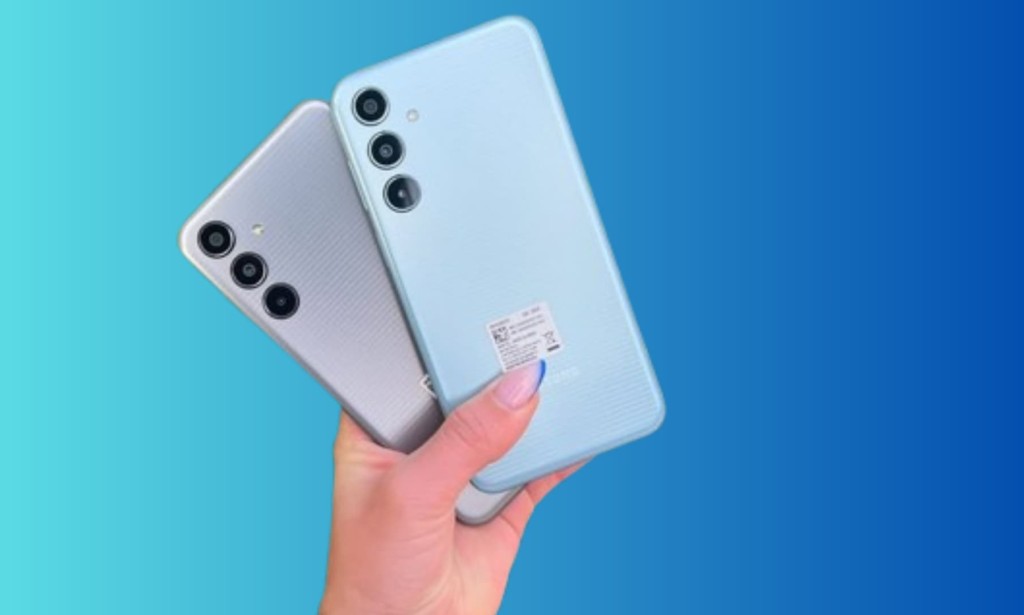
The Galaxy M-series was never designed to compete with dedicated gaming phones. Samsung built it as a practical, long-lasting everyday device for buyers who want solid performance and good battery life without the premium price tag. But that same formula large display, capable chipset, big battery, and budget-friendly pricing turns out to be a reasonably good starting point for mobile gaming. Whether it is actually worth buying for gaming depends on what you play, how seriously you play it, and which M-series model you are looking at.
The Display: One's Genuine Strength for Gaming
Every recent M-series phone uses a Super AMOLED or Super AMOLED+ panel with a 120Hz refresh rate. That matters more than most people expect.120Hz screen updates twice as fast as a 60Hz display, which makes every swipe, tap, and on-screen animation appear noticeably smoother. In games like BGMI, Free Fire, and Call of Duty Mobile, the difference between 60Hz and 120Hz is visible and translates to a more responsive feel even when the underlying frame rate does not change.
The Galaxy M56, currently the top of the M-series lineup, features a 6.74-inch Super AMOLED+ display at 1080 x 2340 pixels with a 120Hz refresh rate and a peak brightness of 1200 nits. That brightness level means outdoor gaming in daylight is comfortable, and the AMOLED panel delivers the deep blacks and punchy colors that make visually rich games look significantly better than they would on an LCD screen.
The Galaxy M55 and M55s both use 6.7-inch Super AMOLED+ panels at 120Hz, making the display quality consistent across the M-series range. For the price bracket, you are getting a genuinely good screen for gaming.
The Chipset: Capable for Casual, Limited for Competitive
The Galaxy M56 runs on the Exynos 1480, 4nm chipset with an octa-core CPU running at up to 2.75GHz and an AMD RDNA 2-based Xclipse 530 GPU. It achieves an AnTuTu benchmark score of approximately 908,000, which puts it firmly in the upper mid-range performance bracket. In practical gaming terms, BGMI runs at smooth settings with no meaningful frame drops. Genshin Impact runs at medium quality without serious overheating or throttling during normal sessions. PUBG Mobile handles 60fps on balanced settings without issues.
The Exynos 1480 is not a gaming-first chip. It does not carry the dedicated gaming acceleration features of Qualcomm's Snapdragon 8 Elite or the Dimensity 9500. Under sustained load in demanding titles at maximum graphics settings, it will throttle and warm up. For extended gaming sessions at the highest settings in the most demanding games, the M56 is not the right tool. For everyone who plays at medium to high settings and takes breaks between sessions, it handles everything well.
The Galaxy M55 uses the Snapdragon 7 Gen 1 Accelerated Edition, which is a slightly older chip that performs comparably to the M56 in most game scenarios. The M55s carries the Dimensity 7300, also a capable upper mid-range processor.
Battery: The Single Best Reason to Game on an M-Series
This is where the M-series genuinely excels compared to everything else at its price point. The Galaxy M56 packs a 5,000mAh battery with 45W wired fast charging. The Galaxy M55 and M55s each carry the same 5,000mAh capacity. These batteries deliver between two and three days of mixed use, and even heavy gaming sessions running for three to four hours will typically leave the M56 above 40% battery remaining.
For gaming specifically, long battery life matters as much as raw performance. A phone that can run two hours of BGMI and still have charge left for the rest of the day is more practical for a real gaming setup than a phone that runs hotter and faster but dies after 90 minutes of sustained use. The M-series consistently wins on endurance compared to competing options at similar prices.
The 45W fast charging on the M56 fills the 5,000mAh cell from empty to roughly 70% in under an hour, meaning a short charge break during a gaming session gets you back to a comfortable battery level quickly.
Thermal Performance: The Honest Trade-Off
Mid-range chips generate more heat under sustained gaming load than flagship processors with advanced cooling architectures. The M56 includes a vapor cooling chamber, which manages thermals adequately for sessions under 45 minutes. Beyond that, the phone will feel warm to the touch and performance will throttle slightly, which shows up as occasional frame drops in graphics-intensive games at maximum settings.
This is not unique to Samsung's M-series every Android phone in this price range faces the same constraint. Managing it means playing at medium to high graphics settings rather than maximum, which most mobile games are designed to handle gracefully anyway. Samsung has optimized One UI's game booster to maintain frame consistency at moderate settings, and the real-world gaming experience on the M56 is solid as long as expectations are calibrated to the chipset tier.
RAM and Storage: Adequate, Not Excessive
The Galaxy M56 starts at 8GB of RAM with 128GB or 256GB storage options using UFS 3.1 technology. 8GB is sufficient for running modern mobile games alongside a reasonable number of background apps without the game being killed by the system. UFS 3.1 storage delivers fast loading times within games, which is noticeable compared to the UFS 2.2 storage found on older or cheaper models.
For comparison, dedicated gaming phones typically offer 12GB or 16GB of RAM. On the M56, multitasking while gaming keeping a browser tab open in the background, for example is functional but not unlimited. Keeping memory-heavy apps closed while gaming is a practical habit on this device.
Software: Six Years of Gaming-Ready Updates
Every current M-series device comes with Samsung's six-year software update promise. That means the Galaxy M56 will receive major Android OS updates through Android 22 and security patches through 2031. For a gaming phone, this matters because game developers regularly update their titles to require newer Android APIs and security standards. A phone that falls behind on OS updates gradually loses compatibility with new game features and sometimes entire titles.
Game Booster is Samsung's dedicated gaming overlay, available on every Galaxy M-series phone. It reduces background processes, stabilizes frame rates, blocks notifications during gameplay, monitors device temperature, and allows per-game performance profiles. It does not transform the hardware performance, but it squeezes consistent results out of the chipset and helps prevent the thermal throttling that comes from unmanaged background activity.
Who Should Buy an M-Series Phone for Gaming
The Galaxy M-series is worth buying for gaming if you play mid-tier titles like BGMI, Free Fire, FIFA Mobile, Clash of Clans, Call of Duty Mobile, and similar games at medium to high settings. If you play Genshin Impact or PUBG New State and want maximum graphics settings at maximum frame rates for extended sessions, you will hit the M-series chipset's limits and will be better served by either the Galaxy A56 at $499 or a dedicated gaming phone from a competing brand.
For students, casual gamers, and buyers who want a practical daily driver that handles gaming as one of several use cases, the Galaxy M56 at its current price is a sensible choice. The display quality, battery endurance, software support, and build quality are all stronger than most of the competition at this price point, and the gaming performance is genuinely good for everything except the most demanding mobile titles at maximum settings.

You must be logged in to post a comment.