
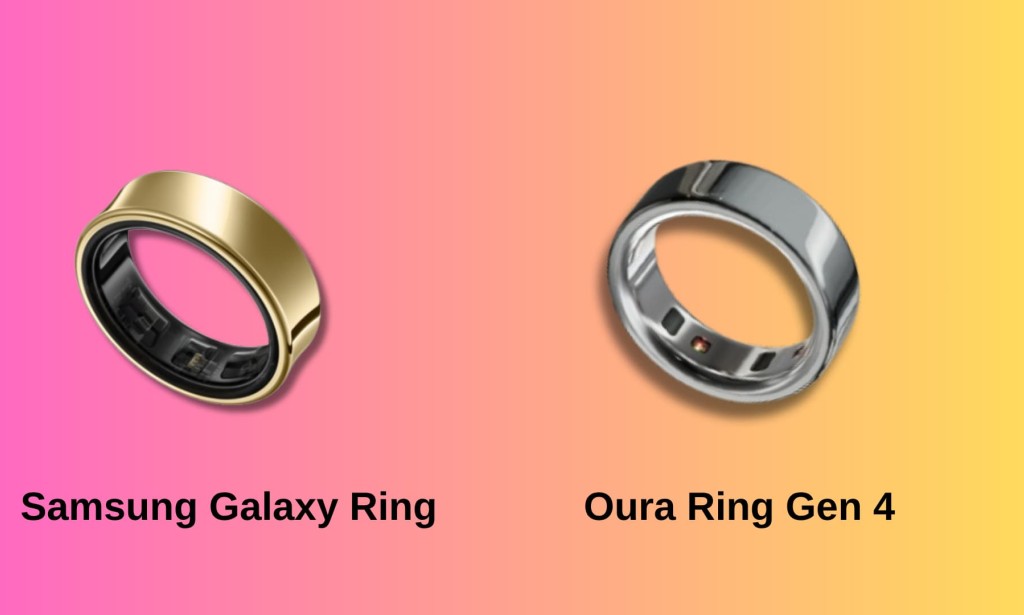
Smart rings have moved from niche curiosity to a genuine category worth paying attention to. The Oura Ring Gen 4 has been the standard-bearer for years, but Samsung's entering the market with the Galaxy Ring changed the competitive picture significantly. Both devices cost serious money, and both promise to track your health around the clock. But they make different choices about design, software, ecosystem, and pricing and those differences matter a lot depending on who you are and how you plan to use the ring.
This comparison covers every area that matters, using verified real-world data and independent testing observations. Neither brand is favored here the goal is simply to help you pick the right one.
Price: Upfront Cost vs Long-Term Cost
This is where the comparison gets immediately interesting, because the pricing structures are fundamentally different.
The Samsung Galaxy Ring costs $399 upfront with no ongoing subscription required. You pay once and all features are available indefinitely.
The Oura Ring Gen 4 starts at $349 upfront $50 less than the Galaxy Ring but requires a monthly membership of $5.99 to access health insights and analysis. Without the subscription, the ring functions in a severely limited capacity.
Over time, the math shifts significantly. By the end of the first year, an Oura Ring Gen 4 owner has spent $349 plus $71.88 in subscription fees — totaling $420.88. By year two, the total reaches $492.76. The Galaxy Ring stays at $399 regardless of how long you use it.
For anyone planning to use their ring for more than one year, the Galaxy Ring is the more affordable option over its lifetime, despite the higher sticker price.
Design and Build
Both rings use titanium construction, but they differ noticeably in dimensions and feel.
The Samsung Galaxy Ring measures 7mm wide and 2.6mm thick. Its smallest size weighs 2.3 grams, rising to 3 grams at the larger end. The outer surface has a concave profile that Samsung says helps reduce surface scratches from daily wear a real concern for smart rings, which take constant abuse from everyday contact with surfaces. The inner surface sits flush, so the ring slides on and off without catching on knuckles. It comes in three colors: black, silver, and gold.
The Oura Ring Gen 4 measures 7.9mm wide and 2.88mm thick, making it slightly wider and thicker than the Galaxy Ring. Weight ranges from 3.3 to 5.2 grams depending on size. For Gen 4, Oura redesigned the inner surface with recessed sensors, eliminating the sensor bump that caused discomfort in earlier generations. It comes in six finishes: black, silver, brushed silver, gold, stealth, and rose gold giving it a clear advantage for users who want the ring to double as jewelry.
On sizing, the Galaxy Ring covers sizes 5 through 15 (11 options), while Oura covers sizes 4 through 15 (12 options). Both offer sizing kits before purchase.
Water resistance is identical on both rated to 100 meters depth, meaning swimming, showering, and water sports are all covered without concern.
In terms of comfort for all-day wear, independent testers who wore both rings simultaneously consistently ranked the Galaxy Ring slightly more comfortable due to its lighter weight and slimmer profile. However, Oura's recessed sensors in Gen 4 represented a meaningful comfort improvement over Gen 3.
Sensors and Health Tracking Features
Both rings share a core sensor suite: optical heart rate monitoring (PPG), blood oxygen saturation (SpO2), skin temperature measurement, and an accelerometer for movement tracking.
Where they differ is in what they do with that data and how accurately they process it.
Sleep Tracking
Sleep tracking is the primary use case for both rings, and both perform well. The Oura Ring Gen 4 has a longer track record here and is generally considered the more refined implementation. Its sleep stage detection distinguishing light sleep, deep sleep, and REM is reported as more consistent across independent testing. The Galaxy Ring's sleep tracking is solid and more than adequate for general users, but reviewers who tested both side by side typically gave Oura the edge on sleep stage accuracy.
Heart Rate Monitoring
Both rings track heart rate continuously throughout the day and during workouts. Independent testing has generally shown comparable accuracy for resting heart rate between the two. For elevated heart rates during exercise, the Galaxy Ring's accuracy drops off more noticeably than the Oura Ring Gen 4, which is a known limitation of ring-based optical sensors during movement but Oura handles it better.
Skin Temperature
Both rings measure skin temperature for cycle tracking, illness detection, and overnight baseline monitoring. Oura's temperature tracking has been the benchmark in this category since Gen 3. Galaxy Ring's implementation is functional but considered less sensitive in detecting subtle variations.
Cycle Tracking and Women's Health
Oura Ring Gen 4 has more developed menstrual cycle tracking features, including period prediction and fertility window estimation. The Galaxy Ring also supports cycle tracking through Samsung Health but with less depth in the analysis layer.
Stress and Recovery
The Galaxy Ring uses a combination of heart rate variability and movement data to generate an Energy Score a daily readiness metric. Oura uses a similar concept called its Readiness Score, which factors in activity, sleep, and biometric trends. Both are useful, but Oura's Readiness Score has been refined through more generations and is generally considered more nuanced.
App and Software Experience
The app experience is where the two devices diverge most clearly.
The Oura Ring Gen 4 app works on both Android and iOS. This is a significant practical advantage anyone with an iPhone can use the Oura Ring, while Galaxy Ring users are locked to Android only. The Oura app presents health data in a well-organized layout with clear daily scores for sleep, readiness, and activity. Oura Lab, a feature built into the app, lets users try new experimental features before official release. AI-powered food logging was added to the app, giving it a functionality edge beyond pure biometric tracking.
The Samsung Galaxy Ring app is part of Samsung Health and works on Android only. Full feature access requires a Samsung-brand phone. Galaxy Ring users with a non-Samsung Android phone can use the ring, but some analysis features are limited or unavailable. For Samsung phone owners, the integration with the broader Galaxy ecosystem is tight the Galaxy Watch and Galaxy Ring can work together, and wearing a Galaxy Watch alongside the Galaxy Ring can extend the ring's effective battery life by shifting some processing to the watch.
In terms of third-party app integration, Oura Ring connects to Apple Health, Google Health Connect, and a wider range of fitness platforms. Galaxy Ring integrates with Google Health Connect and Samsung Health but has a more limited third-party reach.
Battery Life and Charging
Both rings claim similar battery life Oura Ring Gen 4 is rated for up to 8 days and the Galaxy Ring for up to 7 days. Real-world usage from independent testers typically lands both devices around 5 to 6 days under normal conditions with continuous heart rate tracking and sleep monitoring active.
The difference of roughly one day in claimed battery life is minimal in practice and unlikely to be a deciding factor.
Where Samsung has a clear practical advantage is the charging case. The Galaxy Ring ships with a portable charging case that holds a charge equivalent to about 1.5 full ring charges. A 30-minute top-up in the case delivers around 40% battery. For travel or situations where you don't have access to a cable, this is genuinely useful. The Oura Ring charges via a flat wireless charging dock and has no portable case equivalent.
Charging time from empty to full is approximately 60 to 80 minutes for both rings.
Ecosystem and Compatibility
This is one of the most important practical considerations, and it depends entirely on what phone you use.
Oura Ring Gen 4 works with any iPhone or Android phone. It is the only smart ring in this comparison with iOS support.
Samsung Galaxy Ring works with Android only, and full feature access is tied to Samsung Galaxy phones running One UI. Non-Samsung Android users get reduced functionality.
If you use an iPhone, the Galaxy Ring is not a practical option. Oura is the clear choice.
If you use a Samsung Galaxy phone, the Galaxy Ring integrates tightly into your existing ecosystem.
If you use a non-Samsung Android phone, both rings are technically compatible, but Oura offers a more complete experience.
Who Each Ring Is Built For
The Samsung Galaxy Ring is best suited for Samsung Galaxy phone users who want no-subscription health tracking, a lighter and slimmer ring, and a device that integrates with the broader Galaxy ecosystem. It's a strong choice for users focused primarily on sleep tracking, daily activity, and energy management without the ongoing cost of a membership.
The Oura Ring Gen 4 is best suited for users who want the most refined health tracking experience available in a ring form factor, iPhone users, or anyone who values deeper software analysis, more color and finish options, and a longer track record of accuracy in sleep and temperature tracking. The subscription cost is real, but the depth of the platform reflects where that money goes.

You must be logged in to post a comment.