
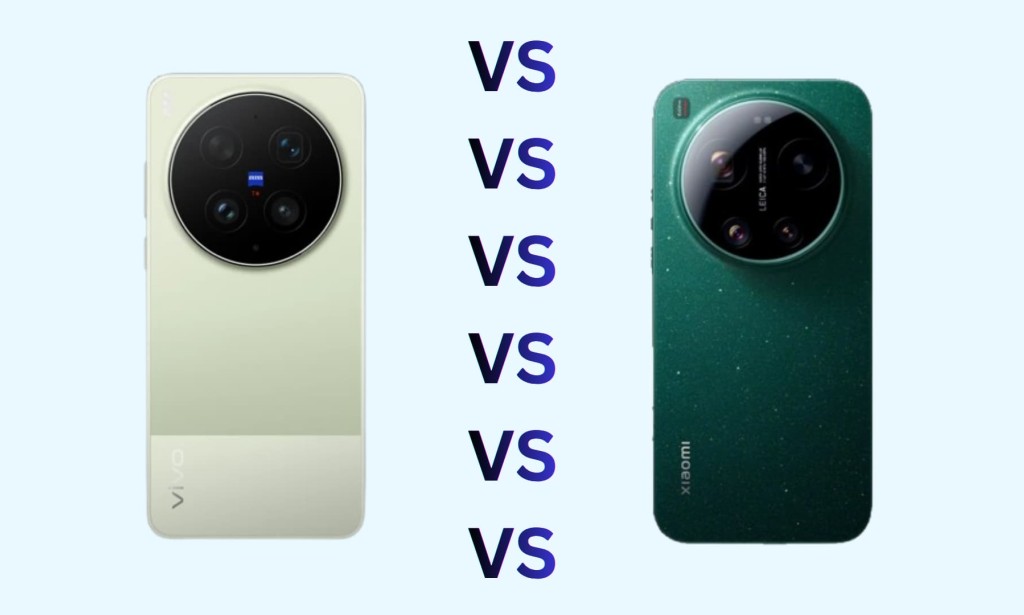
Let's skip the preamble. You already know both of these phones are expensive. You already know both of them have cameras that would have seemed impossible three years ago. What you probably want to know is simple: if you are handing over $1,300 or more for a smartphone in 2026, which one of these two actually deserves it more?
The answer is not straightforward and anyone who tells you otherwise is either selling you something or hasn't used both phones seriously. The Vivo X300 Ultra and the Xiaomi 17 Ultra are genuinely different devices that happen to occupy the same price bracket, run the same chipset, and obsess over the same thing: the camera.
Let's figure out which one is right for you.
First, the Numbers
Before getting into the nuance, here is where both phones stand on paper.
| Vivo X300 Ultra | Xiaomi 17 Ultra | |
| Display | 6.82" LTPO AMOLED 2K, 144Hz, 4500 nits | 6.9" AMOLED LTPO, 120Hz, 3500 nits |
| Chipset | Snapdragon 8 Elite Gen 5 | Snapdragon 8 Elite Gen 5 |
| RAM / Storage | Up to 16GB / 1TB | 16GB / up to 1TB |
| Main Camera | 200MP Sony LYT-901, f/1.85 (35mm) | 50MP 1-inch OmniVision OV50X, Leica Summilux |
| Telephoto | 200MP Samsung HPB, 85mm periscope | 200MP Samsung HPE, 75–100mm continuous optical zoom |
| Ultra-wide | 50MP Sony LYT-828 | 14mm Leica-tuned ultra-wide |
| Front Camera | 50MP | 50MP |
| Battery | 6,600mAh, 100W wired / 40W wireless | 6,800mAh, 90W wired / 50W wireless |
| OS | OriginOS 6 (Android 16) | HyperOS 3 (Android 16) |
| Water Resistance | IP68 + IP69 | IP68 + IP69 |
| Camera Partner | ZEISS | Leica |
| Price (starts at) | ~$1,300 | ~$1,500 |
The Camera Question: And It Is the Only Question That Really Matters Here
Both phones exist for one reason above all others: to take photographs that embarrass every other smartphone on the market. Everything else display, software, battery is secondary to that mission. So let's start there.
Vivo's approach with the X300 Ultra is architectural. They have built a system around three ZEISS-certified prime lenses, each designed for a specific shooting scenario. The main camera is a 200MP Sony LYT-901 sensor with a 35mm equivalent focal length — a deliberate choice that Vivo describes as best suited for street photography and documentary work, mimicking the field of view closest to the human eye. The f/1.85 aperture, combined with ZEISS T* coating and a 12-channel spectral color sensor, gives the X300 Ultra some of the most color-accurate and tonally honest images a smartphone has ever produced.
The telephoto is where Vivo pulls ahead of almost everything else in terms of raw hardware ambition. A 200MP Samsung HPB sensor at 85mm with gimbal-level stabilization and 60 autofocus operations per second. Beyond that, Vivo sells optional ZEISS G2 teleconverter accessories — one extending reach to 200mm (approximately 8.7x optical), and an Ultra version pushing to 400mm with a 15-element optical design. No other smartphone available globally right now can match that kind of optical reach without going into the territory of dedicated camera attachments.
Xiaomi takes the opposite philosophical road. Rather than stacking megapixels across every lens, the 17 Ultra puts its faith in sensor size and optical quality. The main camera is a 50MP 1-inch class OmniVision OV50X sensor with LOFIC hardware HDR technology, paired with a Leica Summilux lens that uses full-lens coating to eliminate flare, ghosting, and chromatic aberration. A 1-inch sensor collects significantly more light than any traditional smartphone sensor — and in low-light conditions, that physical advantage translates directly into better photographs. Night shots, indoor portraits, golden hour landscapes — the Xiaomi 17 Ultra handles all of it with a naturalness that is hard to replicate through software processing alone.
Its telephoto is equally interesting. A 200MP Samsung HPE sensor with continuous optical zoom operating between 75mm and 100mm. Unlike fixed focal lengths, this means the Xiaomi 17 Ultra can maintain true optical quality at any point in that zoom range not just at 3x or 5x, but everywhere in between. For portrait photographers who constantly adjust their framing, this is a genuinely useful innovation.
The honest assessment? For versatility, zoom range, and telephoto power, Vivo wins. For low-light main camera performance and that unmistakable Leica rendering quality, Xiaomi wins. Neither is objectively better in every situation. They are better in different situations.
Beyond the Camera: What Else Separates Them
Display: The Vivo X300 Ultra runs a 144Hz LTPO panel versus the Xiaomi's 120Hz. The Vivo also reaches 4,500 nits peak brightness compared to the Xiaomi's 3,500 nits. Both panels look excellent in daily use, but the Vivo is measurably sharper in motion and more readable in harsh sunlight.
Performance: Identical chipset, identical RAM ceiling, identical real-world results. The Snapdragon 8 Elite Gen 5 in both phones handles everything without breaking a sweat. The Xiaomi 17 Ultra edges slightly ahead in Geekbench multi-core benchmarks (10,941 vs 10,359 for the Vivo), but this is a difference no one will ever feel in daily use.
Battery and Charging: The Xiaomi carries a 6,800mAh cell versus the Vivo's 6,600mAh — a 200mAh advantage that gives Xiaomi a marginal endurance edge. On charging speed, the Vivo hits 100W wired versus Xiaomi's 90W. Xiaomi leads on wireless at 50W versus Vivo's 40W. Both phones will last a full day of heavy use without any concern.
Software: OriginOS 6 on the Vivo is clean, fast, and visually lighter. HyperOS 3 on the Xiaomi is more feature-dense, offers stronger AI tools, and includes unusual features like Apple device mirroring. For most users, the Xiaomi's software feels slightly more polished on a global level — OriginOS is newer to international markets and still building its reputation outside Asia.
Build and Design: Both carry IP68 and IP69 ratings. The Vivo's design is camera-inspired — knurled edges, silver trim, pancake lens aesthetic. The Xiaomi is more restrained, taking its cues from the Leica M-series. The special Leica Leitzphone edition adds a physical mechanical zoom ring that is genuinely unique in the smartphone world, even if its practical benefit is debated.
The Price Reality
The Vivo X300 Ultra starts at approximately $1,300 for the 16GB/512GB model. The Xiaomi 17 Ultra opens at $1,500 for the same storage configuration — a $200 premium over the Vivo at the base level. The Xiaomi Leica Leitzphone edition climbs to approximately $2,100, matching the Vivo X300 Ultra's 1TB pricing in some markets.
That $200 difference is meaningful. The Vivo delivers dual 200MP cameras, a superior display, and faster wired charging for less money. The Xiaomi's premium buys you the 1-inch sensor and Leica optics which for the right kind of photographer is absolutely worth paying for. For everyone else, the Vivo is the stronger value.
So, Which One Should You Actually Buy?
Think about the last hundred photos you took on your phone. Where were they shot? What were you photographing?
If your answer involves a lot of outdoor daylight shooting, long-distance subjects, sports, wildlife, or anything requiring telephoto reach the Vivo X300 Ultra is built for you. Its dual 200MP system and optional ZEISS teleconverters give you optical capability that the Xiaomi simply cannot match at any price.
If your answer involves restaurants, nightlife, indoor events, travel at dawn or dusk, or portraits where you care deeply about skin tones and natural color the Xiaomi 17 Ultra's 1-inch Leica sensor will consistently deliver images that feel more like photographs and less like smartphone snapshots.
Both phones are exceptional. Both will make you look like a better photographer than you probably are. The difference between them is not about which one is good enough they both are it is about which one matches the way you see the world through a lens.

You must be logged in to post a comment.