
For the past couple of years, anyone asking about a Snapdragon X-powered desktop mini PC has been met with disappointment. Lenovo made a couple of attempts with the Snapdragon X and X Plus, one announced Snapdragon X Elite mini PC turned out to be vaporware, and Qualcomm's own developer kit was widely considered a misstep. The desktop side of the Snapdragon PC story has been a blank space until now.
At Computex 2026, ASUS and Qualcomm jointly announced the ASUS Ascent QN10, the first mini PC to run on the Snapdragon X2 Elite platform. It's a genuinely significant moment for the Arm-based Windows PC ecosystem, and the device itself makes a compelling first impression on paper.
What the Snapdragon X2 Elite Actually Is
Before getting into the Ascent QN10 specifically, it's worth understanding what the Snapdragon X2 Elite brings to the table, because this is the chip doing all the heavy lifting.
The Snapdragon X2 Elite is Qualcomm's second-generation premium Windows PC platform, announced in September 2025 and built on the third-generation Qualcomm Oryon CPU architecture. It comes in multiple configurations the standard X2 Elite with either 12 or 18 cores clocked up to 4.7GHz, and the X2 Elite Extreme with 18 cores reaching up to 5.0GHz which Qualcomm claims is the first Arm-based PC chip to hit that clock speed milestone.
The NPU is what makes this chip particularly relevant in 2026. The Snapdragon X2 Elite ships with an 80 TOPS Hexagon NPU, up from 45 TOPS on the original X Elite. Microsoft's Copilot+ PC minimum requirement sits at 40 TOPS, so the X2 Elite clears that threshold by a comfortable margin. In terms of raw performance versus its predecessor, Qualcomm's figures point to up to 31% higher performance at the same power level and up to 43% lower power consumption at matched performance meaningful numbers for a platform being used in a fanless or near-fanless compact chassis.
The integrated GPU is a Qualcomm Adreno, and the chip supports Wi-Fi 7 with High Band Simultaneous multi-link operation at up to 5.8Gbps, alongside 5G connectivity up to 10Gbps peak on supported configurations.
The ASUS Ascent QN10 A Very Small Package
The Ascent QN10's most immediately striking characteristic is its size. The chassis measures under 0.7 liters in volume a figure ASUS puts into context by noting it's 86% smaller than a standard 5-liter mini PC form factor. To put that more simply: this is a genuinely tiny machine. Think of something barely larger than a can of soda sitting on your desk.
That size doesn't mean it's been thermally compromised, at least according to the design brief. ASUS and Qualcomm have built the QN10 to sustain heavy, intensive professional workloads while running cool and quiet a tall order for a chassis this small, but one the Snapdragon X2 Elite's power efficiency makes more achievable than it would be with traditional x86 silicon at comparable performance levels.
Connectivity: Seven USB Ports in a Tiny Box
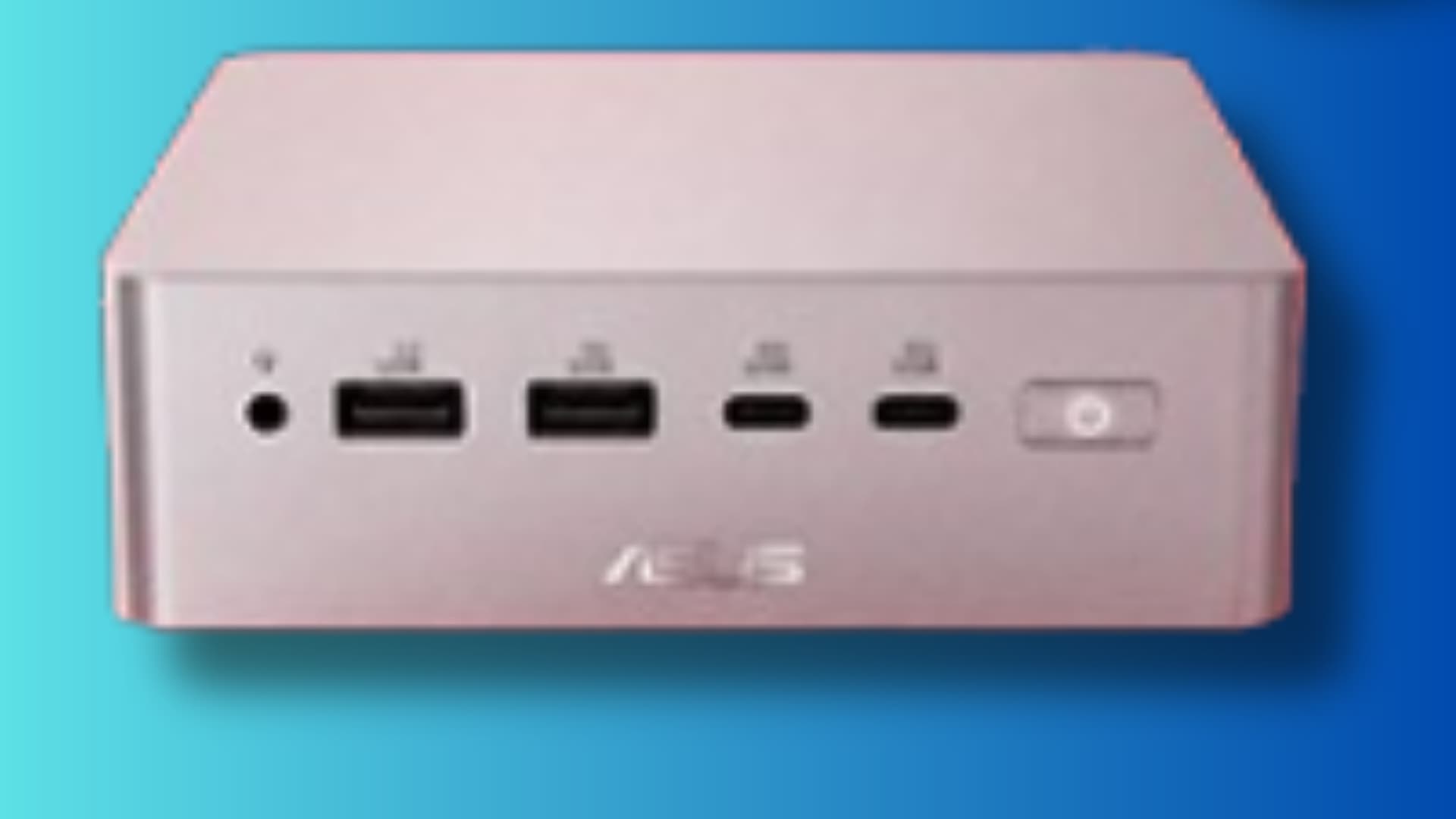
One area where the Ascent QN10 doesn't make compromises is port selection. The device ships with seven USB ports in total: three USB 4 ports, three USB 3.2 Gen 2 ports, and one USB 2.0 port. That's a generous port layout for a machine this compact and covers the connectivity needs of most professional and prosumer setups without requiring a separate hub.
Additional connectivity details, including display output specifications and networking options, are expected to be confirmed closer to or at launch.
Who This Is Actually For
The Ascent QN10 is being positioned squarely at prosumers, developers, and businesses that need serious multi-core performance in a small footprint. It's not a low-power home server or a Raspberry Pi replacement. The Snapdragon X2 Elite is a full-performance chip that, with appropriate thermal management, is capable of handling demanding workloads including AI inferencing, content creation, software development, and according to some reports even modern games at respectable settings.
The device competes directly with Apple's Mac Mini and the growing wave of AMD Ryzen AI MAX+ 395-powered mini PCs, both of which occupy a similar performance tier. The Mac Mini has faced some supply constraints in early 2026 due to memory shortages, which creates an opening for alternatives. Whether the Ascent QN10 can fill that gap effectively will depend heavily on final pricing and software compatibility two areas where Arm-based Windows PCs still have ground to cover.
AI Workloads and the Agent PC Concept
A significant part of the Computex narrative around the Ascent QN10 focuses on AI. Qualcomm has been pushing the concept of an "agent computer" a local device capable of running AI workloads on-device rather than relying on cloud processing. The 80 TOPS NPU in the Snapdragon X2 Elite is the hardware foundation for that pitch, and the Ascent QN10's desktop form factor means it can run those workloads continuously without the battery constraints that laptops face.
For developers building AI applications, or businesses that want on-premise AI processing without cloud costs or latency, the combination of an 80 TOPS NPU in a compact, always-on desktop form factor is a practical proposition rather than just a marketing angle.
Pricing and Availability Not Yet Confirmed
As of the Computex announcement, ASUS has not confirmed pricing or an official release date for the Ascent QN10. Given the premium nature of the Snapdragon X2 Elite platform and the current premium on LPDDR5x memory due to supply constraints driven by AI infrastructure demand, the QN10 is unlikely to be a budget purchase. Comparable mini PCs with similar performance capabilities from Apple and AMD partners have been priced in the $700 to $1,200 range, which gives a rough baseline for where the QN10 might land though that's speculative until ASUS confirms numbers.
What is clear is that ASUS intends to bring the device to market, and the Computex announcement signals it's further along than a concept stage. More details on pricing and availability are expected to follow in the coming weeks.
Why This Matters for the Snapdragon PC Ecosystem
The significance of the Ascent QN10 extends beyond the device itself. The Snapdragon X series has been a laptop-first story since its debut. Every major OEM has been shipping Snapdragon X laptops, and the platform has established itself as a credible Windows PC option particularly for thin-and-light users who prioritize battery life and fanless operation.
Bringing that same silicon into a desktop mini PC format opens up an entirely different category of users. Developers who want a compact CI/CD machine, studios that need a quiet workstation for audio and video work, businesses running local AI inference all of these use cases are better served by a desktop form factor than a laptop. The Ascent QN10 is the first Snapdragon X2 product that speaks directly to that audience, and if ASUS prices it competitively, it could do a lot to accelerate the Snapdragon desktop ecosystem that the platform has been missing.

You must be logged in to post a comment.