
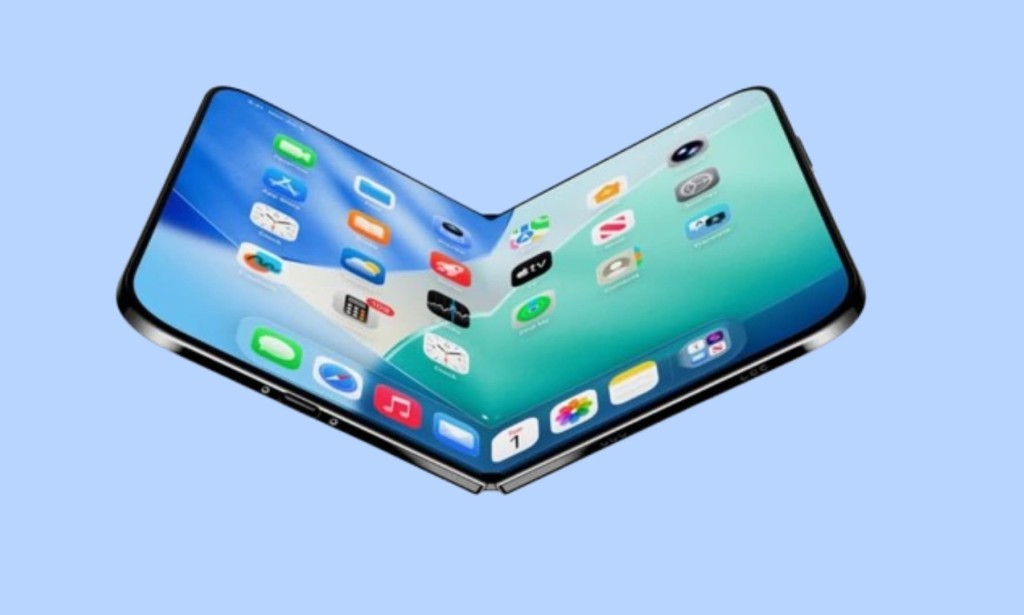
Apple has spent years watching the foldable smartphone market develop around it. Samsung, Google, Motorola, and a long list of Chinese manufacturers have all shipped foldables while Apple said nothing. That silence appears to be ending. Leaked specifications and supply chain reports have been building a detailed picture of what Apple is actually planning and the device that has emerged from those leaks is called the iPhone Ultra Fold.
This article is based entirely on leaked and rumored information. Apple has not officially announced or confirmed any foldable iPhone product. Everything here reflects what sources and supply chain reports have suggested so far not confirmed specifications.
With that said, here is the most complete picture of the iPhone Ultra Fold that current leaks describe.
Display: 7.8-Inch Inner Screen, 5.5-Inch Cover Screen
The most striking aspect of the iPhone Ultra Fold's rumored design is its display configuration. The inner foldable panel is reportedly a ~7.8-inch LTPO OLED in a 4:3 aspect ratio — a square-ish format that has been compared to an iPad mini's proportions. This is a deliberate design choice that differentiates the Ultra Fold from the tall, narrow book-style foldables that dominate the Android market.
The cover display what you see when the phone is folded shut is rumored to be a ~5.5-inch LTPO OLED in a wide aspect ratio, similar to how an iPhone mini looked and felt in the hand. Both panels reportedly support 120Hz ProMotion adaptive refresh rate, matching the display quality Apple already ships on its Pro line.
The crease problem that has plagued other foldables appears to be a priority for Apple. Leaked details describe the use of Optically Clear Adhesive (OCA) engineering combined with a liquid metal hinge mechanism aimed at producing a nearly seamless, crease-minimized display — a challenge no foldable manufacturer has fully solved yet.
Design: Apple's Thinnest Device Ever When Open
The thickness figures in the leaked specs are arguably the most impressive numbers in the whole package. When unfolded, the iPhone Ultra Fold is rumored to measure just ~4.5mm to 4.7mm which would make it the thinnest device Apple has ever shipped, thinner even than the iPhone 17 Air. When folded, it reportedly measures around 9.0mm to 9.5mm thinner than most current book-style Android foldables.
To achieve this, Apple reportedly uses a titanium alloy outer frame for rigidity paired with aluminum internal components to control both weight and thermal performance. A vapor chamber cooling system adapted from the setup used in the iPhone 17 Pro is included to manage heat in such a slim chassis.
Chip: Apple A20 on TSMC 2nm
The iPhone Ultra Fold is expected to ship with the Apple A20 chip, built on TSMC's 2nm process node. This would be Apple's most advanced chip at launch the same process node shrink that has delivered consistent performance and efficiency gains across every previous Apple Silicon generation.
The chip is paired with 12GB of RAM, optimized for heavy multitasking and on-device Apple Intelligence processing. The A20 would need to handle seamless transitions between cover screen and inner display, multiple windows running simultaneously in split-screen mode, and local AI inference all while the thin chassis limits available thermal headroom.
Cameras: Dual System, No Telephoto
This is where the leaked specs introduce the most notable trade-off. To hit the ~4.5mm unfolded thickness, Apple is reportedly omitting the telephoto lens entirely and shipping the Ultra Fold with a dual rear camera system: a 48MP wide camera and a 48MP ultrawide camera.
No periscope telephoto. No 5x optical zoom. For a device positioned as Apple's most premium product, dropping the telephoto is a significant compromise and it appears to be a deliberate sacrifice made in service of the thinness goal.
The reasoning is straightforward: periscope telephoto systems require depth inside the chassis that simply doesn't exist at 4.5mm. Apple has apparently decided that the form factor statement matters more than the full Pro camera suite at launch.
Biometrics: Touch ID Returns, Face ID Gone
Another major departure in the leaked specs is the biometrics setup. The iPhone Ultra Fold reportedly uses Touch ID built into the side power button, rather than Face ID. The reason is the same as the camera compromise the TrueDepth camera system that powers Face ID requires physical depth and space in the top bezel that a 4.5mm chassis cannot accommodate.
Touch ID on the side button is not unfamiliar territory for Apple it used the same approach on the iPhone SE (3rd generation) and several iPad models. But losing Face ID on what will likely be Apple's most expensive iPhone ever is a trade-off that will generate significant discussion when the device is officially revealed.
Connectivity: eSIM Only, Wi-Fi 7, Apple C2 Modem
The iPhone Ultra Fold is rumored to be eSIM only with no physical SIM card slot continuing the direction Apple started with the iPhone 14 in the US market. Wireless connectivity includes Wi-Fi 7 and Apple's custom C2 5G modem, the second generation of the in-house modem that Apple first introduced to move away from Qualcomm modems. Bluetooth is expected to match whatever Apple ships with the iPhone 17 lineup.
MagSafe support remains uncertain. Early case design leaks show a circular cutout suggesting it may be present, but internal component layouts may omit the magnetic charging ring to reclaim space in the ultra-thin chassis. This is one of the details that hasn't yet been confirmed through supply chain reporting.
Software: iOS 20 With Foldable-Specific Features
The iPhone Ultra Fold is expected to ship with iOS 20, which reportedly includes dedicated features built specifically for the folding form factor. These include a proper split-screen multitasking mode and continuity features that manage app state and layout as users open and close the device ensuring that apps adapt gracefully between the 5.5-inch cover display and the 7.8-inch inner panel rather than simply scaling up.
This would be Apple's first genuine attempt at a foldable-optimized software experience, and how well iOS 20 handles the transition between screens will be one of the most scrutinized aspects of the device at launch.
Full Leaked Specs at a Glance
| Feature | Rumored Details |
| Inner Display | ~7.8-inch LTPO OLED, 4:3 ratio, 120Hz |
| Cover Display | ~5.5-inch LTPO OLED, 120Hz |
| Thickness (Folded) | ~9.0–9.5mm |
| Thickness (Unfolded) | ~4.5–4.7mm |
| Chip | Apple A20 (TSMC 2nm) |
| RAM | 12GB |
| Storage | 256GB / 512GB / 1TB |
| Rear Cameras | 48MP Wide + 48MP Ultrawide (no telephoto) |
| Biometrics | Touch ID (side button) — no Face ID |
| Connectivity | eSIM only, Wi-Fi 7, Apple C2 5G modem |
| MagSafe | Uncertain |
| Software | iOS 20 with foldable split-screen mode |
| Frame | Titanium alloy + aluminum |
| Cooling | Vapor chamber |
Why Apple Is Making This Trade-Offs
Reading through the leaked specs, a clear philosophy emerges: Apple is building the thinnest possible foldable first and accepting the hardware trade-offs that come with that constraint. No telephoto. No Face ID. Possibly no MagSafe. The 4.5mm unfolded measurement appears to be the design target, and everything else has been engineered around hitting it.
This approach is consistent with Apple's history. The original iPhone had no App Store, no copy-paste, no MMS. The first Apple Watch had limited apps and slow performance. Apple tends to launch first-generation products with a strong form statement and fewer features, then iterate aggressively in subsequent generations.
If the Ultra Fold lands at ~4.5mm unfolded and ~9.5mm folded thinner than any current Android foldable with a seamless crease solution and Apple's software polish, it will set the physical benchmark for the foldable category regardless of which specs got left out.

You must be logged in to post a comment.