
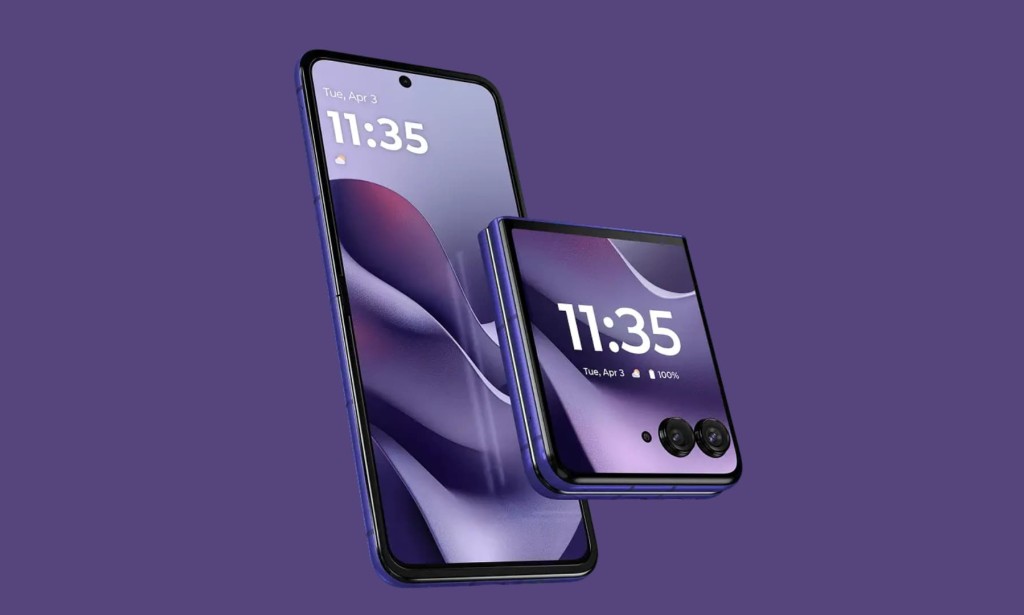
Motorola has a formula, and it works. Every year, the Razr Ultra arrives as the most capable flip phone you can buy, better cameras than Samsung's competing Galaxy Z Flip, more processing power, longer battery life, faster charging, and every year, the verdict lands somewhere in the same neighborhood: it is great, but wait for a discount.
The 2026 model follows that pattern almost perfectly. The Razr Ultra 2026 is an excellent flip phone. It is probably the best flip phone on the market right now. It has a new and genuinely improved main camera sensor, a larger silicon-carbon battery, and brighter displays than last year. But it also costs $1,499, a full $200 more than the Razr Ultra 2025, for upgrades that are meaningful but not transformative.
The question is not whether this is a good phone. It clearly is. The question is whether the improvements justify paying flagship slab money for a device that is, in most measurable ways, a refined version of something that launched twelve months ago.
Here is everything you need to know.
Full Specifications
| Feature | Detail |
|---|---|
| Price | $1,499.99 |
| Announced | April 29, 2026 |
| Available | May 21, 2026 |
| Form Factor | Clamshell foldable |
| Inner Display | 7.0-inch pOLED Extreme AMOLED, 2640x1080, 165Hz LTPO, HDR10+, 4,500 nits |
| Cover Display | 4.0-inch pOLED, 1272x1080, 165Hz |
| Chipset | Qualcomm Snapdragon 8 Elite (4nm) |
| RAM | 16GB LPDDR5X |
| Storage | 512GB UFS 4.0 |
| Main Camera | 50MP f/1.8, LOFIC sensor, OIS |
| Telephoto | 50MP f/2.0, 3x optical zoom, OIS |
| Ultra-wide | 50MP f/2.2 |
| Front Camera | 50MP f/2.0 |
| Battery | 5,000mAh silicon-carbon |
| Wired Charging | 68W TurboPower |
| Wireless Charging | 30W |
| OS | Android 16 with Hello UI |
| Software Updates | 3 years OS, 4 years security |
| IP Rating | IP48 |
| Dimensions (open) | 171.3 x 74.1 x 7.8 mm |
| Dimensions (folded) | 88.0 x 74.1 x 15.8 mm |
| Weight | 199g |
| Colors | Spring Bud, Pantone Scarlet Sage, Mountain Trail (wood veneer), and more |
| Availability | Motorola.com, Best Buy, Amazon (no major US carriers) |
Design: Familiar, Refined, Still Thick When Folded
Pick up a Razr Ultra 2026 and place it next to the 2025 model, and the differences are subtle to the point of being invisible without a side-by-side inspection. The overall design language is unchanged the same rounded clamshell form factor, the same brushed aluminum frame, the same circular camera housing on the back. Motorola has not reinvented the aesthetic here, and for a phone this good-looking, that is not necessarily a criticism.
What has changed is the selection of finishes. The 2026 model introduces new Pantone-backed colorways, continuing Motorola's collaboration with the color authority that has made the Razr lineup one of the most visually distinctive in the industry. A natural wood veneer option is available again this year a finish that is genuinely unusual in the smartphone market though it does attract dust and lint around the camera cutouts more than smooth glass or leather alternatives.
The front cover glass has been upgraded. Motorola has used tougher glass on the exterior this year, which should improve scratch resistance in daily use an area where previous Razr models drew some criticism.
The one legitimate complaint that carries over from 2025 is folded thickness. At 15.8mm folded, the Razr Ultra 2026 is still noticeably thick in a pocket compared to Samsung's Galaxy Z Flip 7, which made thinness a priority this year. Motorola was able to maintain the same folded dimensions while increasing battery capacity which is technically impressive but anyone hoping for a slimmer form factor will be disappointed.
The hinge feels smooth and solid. The crease down the center of the inner display is less noticeable than on previous generations it is still there if you look for it at certain angles under certain lighting conditions, but in normal use it is easy to forget about entirely.
Display: Two Excellent Screens, Neither Changed
The Razr Ultra 2026 carries two displays and both of them are outstanding.
The inner 7.0-inch pOLED Extreme AMOLED panel runs at 2640x1080 resolution with a 165Hz LTPO adaptive refresh rate, HDR10+ support, and a peak brightness of 4,500 nits. It is one of the brightest displays on any foldable phone currently available, and it holds up well in direct sunlight a common weakness for foldable panels. Colors are punchy and accurate, contrast is excellent, and the high refresh rate makes everything feel fluid.
The cover display is a 4.0-inch pOLED panel, also at 165Hz. This is one of the best cover displays in the industry. At four inches, it is genuinely large enough to use for tasks beyond quick notifications you can read messages, reply to texts, control music playback, run app shortcuts, and access widgets without unfolding the phone. Motorola has allowed full app access through the cover display for several generations now, and it remains one of the most practically useful features of any flip phone on the market.
Neither display has changed from the Razr Ultra 2025. That is worth stating plainly, the specs and physical panels are identical. The brightness figures are improved on paper, but the screen hardware itself carries over. For users upgrading from the 2025 model, there is nothing new here. For anyone coming from an older device or a competing flip phone, both displays will impress.
Performance: Snapdragon 8 Elite, Last Year's Snapdragon 8 Elite
The Razr Ultra 2026 is powered by the Qualcomm Snapdragon 8 Elite the same chip that powered the Razr Ultra 2025. This is not Snapdragon 8 Elite Gen 2 or any newer variant. It is the original 2024 Snapdragon 8 Elite, binned and configured for the Razr Ultra, paired with 16GB of LPDDR5X RAM and 512GB of UFS 4.0 storage.
In practice, this means performance is excellent. The Snapdragon 8 Elite is still one of the most powerful mobile chips available on Android, and 16GB of RAM ensures smooth multitasking across any combination of apps you are likely to run. Gaming performance is strong, AI processing is fast, and the phone handles sustained workloads without significant thermal throttling.
The meaningful point here is competitive context. Samsung's Galaxy Z Flip 7 uses an Exynos chip that the Razr Ultra outperforms clearly in benchmarks and in real-world sustained workloads. On that comparison, Motorola wins. But flagship slab phones at similar or lower price points including the Samsung Galaxy S26 Ultra ship with the newer Snapdragon 8 Elite Gen 5. Buyers paying $1,499 for the Razr Ultra 2026 are paying flagship prices for a chip that is, by the time of purchase, approximately 18 months old. That is a trade-off worth understanding before committing.
Camera: The LOFIC Upgrade Is Real
At first glance, the camera system looks identical to last year. It is still a triple 50MP setup main, telephoto, and ultra-wide with the same focal lengths and apertures. But the main camera has received a meaningful hardware change that should not be dismissed.
The primary 50MP sensor now uses LOFIC technology, Lateral Overflow Integration Capacitor. This is a sensor architecture that adds an extra capacitor beside each pixel's photodiode, designed to catch overflow charge that would otherwise clip and lose highlight detail in bright conditions. The practical result is true single-exposure HDR without the motion artifacts that traditional multi-frame HDR can introduce. Bright highlights sky detail, window light, specular reflections, are handled more naturally and with more detail than on the 2025 model's main sensor.
The f/1.8 aperture is unchanged, and the sensor resolution stays at 50MP. But the improvement in dynamic range and color consistency in challenging lighting conditions is real and measurable. Low-light performance is also improved as a result of the new sensor architecture.
The 50MP 3x periscope telephoto and 50MP ultra-wide cameras carry over from 2025. Both are capable, though the telephoto does not reach the 5x or 10x optical zoom distances of premium slab flagships. For a flip phone, the camera system is the strongest available. Against a Galaxy S26 Ultra or OPPO Find X9 Ultra, it is competitive at standard distances but outclassed at range.
Video capabilities reach 4K at 60fps and include Motorola's Adaptive Stabilization, which combines OIS and EIS for smooth footage during movement. The cover display can also be used as a viewfinder when shooting with the rear cameras a practical feature for selfies using the main sensors rather than the smaller front camera.
Battery Life and Charging: A Genuine Upgrade
This is the area where the 2026 model most clearly earns its existence as a new product.
The Razr Ultra 2026 ships with a 5,000mAh silicon-carbon battery up from 4,700mAh in the 2025 model. That 300mAh increase represents approximately a 6% capacity gain, and silicon-carbon chemistry allows this larger cell to fit within the same physical footprint without increasing the folded or unfolded thickness. For a clamshell foldable a form factor historically compromised by battery size matching the Galaxy S26 Ultra's 5,000mAh capacity is a genuine milestone.
In real-world testing across multiple reviewers, the Razr Ultra 2026 comfortably delivers a full day of use on a single charge under mixed workloads calls, messaging, camera use, social media, streaming. Heavy users pushing the display and camera hard will likely land closer to 14–16 hours of screen-on time. That is a marked improvement over most competing flip phones, including the Galaxy Z Flip 7.
Charging is fast. At 68W wired TurboPower, the Razr Ultra 2026 holds the title for the fastest wired charging available on any flip phone in the US market. Wireless charging at 30W is also competitive. Neither speed has changed from last year, but both remain class-leading within the flip phone segment.
Software: Android 16, Hello UI, and a Familiar Concern
The Razr Ultra 2026 ships with Android 16 and Motorola's Hello UI, a light skin over stock Android that adds useful Moto-specific features including Ready For (desktop mode via USB-C or wireless), Moto AI integration, Peek Display ambient notifications, and the comprehensive cover display app ecosystem.
Motorola's software is clean, fast, and largely free of bloatware. The AI features including Moto AI's integration with Google Gemini and Amazon Alexa continue to improve, with new context-aware suggestions and summarization tools available across the system.
The software update policy remains a legitimate point of criticism. Motorola commits to three years of Android OS updates and four years of security patches for the Razr Ultra 2026. For a phone priced at $1,499, this falls meaningfully short of Samsung's seven-year commitment on Galaxy S26 series devices. Buyers who hold onto phones for three years or more will outlive the official support window.
Availability and Pricing: One More Complication
The Razr Ultra 2026 is available from Motorola's official website, Best Buy, and Amazon. It is not carried by any major US carrier not Verizon, AT&T, or T-Mobile. This is a significant commercial decision that limits the phone's visibility and eliminates carrier trade-in promotions and installment plan options for most buyers.
For context, the base and Plus models in the 2026 Razr lineup are carrier-available. The Ultra is not. This likely pushes buyers toward either the lower-tier models or toward a different brand entirely when browsing in a carrier store.
Motorola is offering a free pair of Moto Buds 2 Plus and a four-pack of Moto Tags with direct purchases, and trade-in discounts of up to $400 on eligible devices. The effective cost with trade-in can therefore be significantly lower than the $1,499 sticker price but that requires trading in a relatively recent device in good condition.
Pros and Cons
Pros
- Best-in-class camera system for a flip phone, LOFIC sensor delivers real HDR improvement
- 5,000mAh silicon-carbon battery matches the Galaxy S26 Ultra in capacity
- 68W wired charging is the fastest available on any US flip phone
- Snapdragon 8 Elite outperforms Samsung's Galaxy Z Flip 7 clearly
- 4-inch cover display is the most functional in the flip phone category
- 7.0-inch inner display reaches 4,500 nits outstanding outdoor brightness
- Unique finish options including natural wood veneer
- Android 16 with clean, fast Hello UI software
- 30W wireless charging included
Cons
- $1,499 is $200 more than last year's model with limited new justification
- Snapdragon 8 Elite is the 2024 chip not a newer generation
- No major US carrier availability must buy direct or through Best Buy/Amazon
- Only 3 years of OS updates for a $1,499 device
- Folded thickness (15.8mm) unchanged thicker than Samsung Galaxy Z Flip 7
- Display hardware identical to Razr Ultra 2025, no upgrade for existing owners
- IP48 rating not as robust as IP68 on slab flagships
- RAM crisis pricing inflates cost without adding proportional value
Who Should Buy the Razr Ultra 2026?
If you are coming from a Galaxy Z Flip 6, a Razr Plus 2024, or any flip phone older than two years, the Razr Ultra 2026 is the clearest upgrade path available. The combination of camera quality, battery life, charging speed, and cover display usability makes it the most capable clamshell foldable on the US market in 2026.
If you already own a Razr Ultra 2025, the upgrade case is weak. The LOFIC sensor is an improvement, and the larger battery is welcome, but paying $200 more for these changes plus a $200 higher starting price is a difficult sell for anyone who bought last year's model at launch.
If you are choosing between the Razr Ultra 2026 and a premium slab flagship in the same price range, the calculus depends on how much you value the flip form factor. At $1,499, the Razr Ultra sits at the same price as a Galaxy S26 Ultra base model which offers more camera versatility, more software support years, carrier availability, and an S Pen. The flip form factor is genuinely enjoyable and unique, but it comes with real trade-offs at this price.
Final Verdict
The Motorola Razr Ultra 2026 is the best flip phone available in the United States right now. That verdict is genuine and unambiguous. No competing clamshell foldable including the Galaxy Z Flip 7 matches it on camera quality, battery life, charging speed, or raw performance.
The problem is the price. At $1,499 with minimal changes over a $1,299 2025 model, the Razr Ultra 2026 asks buyers to absorb a $200 increase driven largely by global RAM shortages rather than meaningful hardware advancement. The LOFIC sensor is a real improvement. The battery upgrade is real. But they are not $200 worth of real.
If you can find it discounted or take advantage of the trade-in offer to bring the effective price down significantly the Razr Ultra 2026 is easy to recommend. At full retail, the smarter move is either the Razr Ultra 2025 at a reduced price, or patience until the 2026 model receives its inevitable discount.
Motorola Razr Ultra 2026
★ Best flip phone of 2026 — but wait for a discount

You must be logged in to post a comment.