
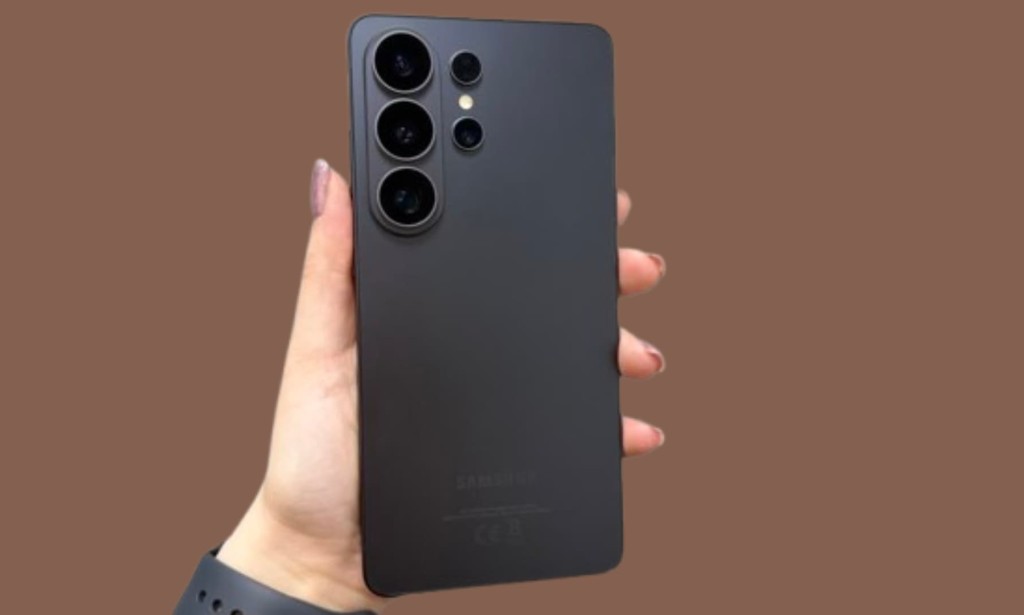
The Galaxy S26 Ultra has been the benchmark for Android flagships for years. It is the phone every other manufacturer measures against the device that defines what premium Android looks like in a given year.
For 2026, Samsung has not reinvented the formula. What it has done is sharpen nearly every edge of it. The Galaxy S26 Ultra brings a genuinely first-of-its-kind display technology, a brighter and faster camera system, the most powerful chipset Samsung has ever shipped, meaningfully faster charging, and a deeper AI integration than any previous generation. It also keeps everything that has made this lineup dominant the S Pen, the ecosystem, the seven-year update commitment while iterating carefully on the hardware.
Is it a radical leap? No. Is it the most refined, most capable, and most future-proofed Android phone you can buy right now? That is a very strong argument to make.
Here is every specification, every feature, and every honest strength and weakness in full detail.
Complete Specifications
Launch
| Detail | Info |
| Announced | February 25, 2026 |
| Released | March 11, 2026 |
| Starting Price | $1,299.99 (12GB/256GB) |
| Mid Tier | $1,499.99 (12GB/512GB) |
| Top Tier | $1,799.99 (16GB/1TB) |
Body and Build
| Detail | Info |
| Dimensions | 163.6 x 78.1 x 7.9 mm (10 mm with camera bump) |
| Weight | 214 g (7.55 oz) |
| Front Glass | Corning Gorilla Glass Armor 2 (anti-reflective) |
| Back Glass | Corning Gorilla Glass Victus 2 |
| Frame | Armor Aluminum 2 |
| SIM | Nano-SIM + Nano-SIM + eSIM + eSIM — Global; Nano-SIM + eSIM — USA |
| IP Rating | IP68 (1.5m for up to 30 minutes) |
| Colors | Black, Cobalt Violet, Sky Blue, White (standard); Silver Shadow, Pink Gold (Samsung.com exclusive) |
| Stylus | S Pen (built-in, no Bluetooth) |
Display
| Detail | Info |
| Size | 6.9 inches |
| Panel Type | Dynamic AMOLED 2X, LTPO |
| Resolution | 3120 x 1440 pixels (Quad HD+) |
| Pixel Density | ~505 ppi |
| Refresh Rate | 120Hz adaptive |
| Peak Brightness | 2,600 nits |
| HDR | HDR10+ |
| Screen-to-body Ratio | 90.3% |
| Privacy Display | Yes — world's first hardware-level angle restriction |
| Anti-reflective | Yes (Gorilla Glass Armor 2 coating) |
Chipset and Performance
| Detail | Info |
| Chipset | Qualcomm Snapdragon 8 Elite Gen 5 for Galaxy (SM8850-1-AD, 3nm) |
| CPU | Octa-core: 2x 4.74 GHz Oryon V3 Phoenix L + 6x 3.63 GHz Oryon V3 Phoenix M |
| GPU | Qualcomm Adreno 840 |
| RAM | 12GB LPDDR5X (256GB / 512GB models); 16GB LPDDR5X (1TB model) |
| Storage | 256GB / 512GB / 1TB UFS 4.0 |
| Storage Expansion | Not supported |
| Cooling | Upgraded vapor chamber + improved Thermal Interface Material (TIM) |
| Geekbench 6 Single | ~3,753 |
| Geekbench 6 Multi | ~11,259 |
Rear Camera System
| Lens | Detail |
| Main | 200MP, f/1.4, 24mm equivalent, PDAF, OIS |
| Telephoto 1 | 50MP, f/1.9, 3x optical zoom, PDAF, OIS |
| Telephoto 2 | 50MP, f/2.8, 5x optical zoom (periscope), PDAF, OIS |
| Ultra-wide | 50MP, f/1.9, 120° field of view, autofocus |
| Flash | LED, Multi-frame |
| Default Capture | 12MP (main); 50MP option available |
| Max Photo Resolution | 200MP (main); 50MP (ultra-wide and 5x) |
Rear Camera Video
| Format | Detail |
| Maximum | 8K @ 30fps |
| 4K | 30fps / 60fps |
| 1080p | 60fps / 120fps / 240fps (slow motion) |
| Video Features | Horizon Lock, Pro Video mode, 4K Log recording |
Front Camera
| Detail | Info |
| Sensor | 12MP |
| Aperture | f/2.2 |
| Autofocus | Yes |
| Video | 4K @ 30fps / 60fps |
| Features | Auto-framing, Portrait mode, Center Stage |
Battery and Charging
| Detail | Info |
| Capacity | 5,000mAh |
| Wired Charging | 60W Super Fast Charging 3.0 |
| 0–50% Time | ~20 minutes |
| 0–75% Time | ~30 minutes |
| Wireless Charging | 25W |
| Reverse Wireless | Yes |
| Charger in Box | No — sold separately |
| Estimated Video Playback | Up to 31 hours |
Connectivity
| Detail | Info |
| 5G | SA/NSA/Sub6 (Global); SA/NSA/Sub6/mmWave (USA) |
| Wi-Fi | Wi-Fi 7 (802.11 a/b/g/n/ac/ax/be), dual-band, hotspot |
| Bluetooth | 5.4, aptX HD, LDAC |
| NFC | Yes |
| USB | Type-C 3.2 Gen 2 |
| Satellite | Yes (select variants) |
| GPS | GPS, GLONASS, BeiDou, Galileo, QZSS |
Security and Biometrics
| Detail | Info |
| Fingerprint | Ultrasonic in-display (3rd gen) |
| Face Recognition | Yes (2D) |
| Samsung Knox | Yes |
| Secure Folder | Yes |
| Secure Wi-Fi | Yes |
Audio
| Detail | Info |
| Speakers | Stereo (tuned by AKG) |
| Dolby Atmos | Yes |
| 3.5mm Jack | No |
| Bluetooth Audio | aptX HD, LDAC, AAC |
Software
| Detail | Info |
| Launch OS | Android 16 with One UI 8.5 |
| OS Updates | 7 years guaranteed (up to Android 23) |
| Security Updates | 7 years |
| AI Platform | Galaxy AI |
| Bixby | Yes — updated with natural language support |
Design: What It Feels Like in Hand
The S26 Ultra is a large phone by any definition. At 163.6mm tall and 78.1mm wide, single-handed use is limited — but that is a deliberate trade-off for a 6.9-inch display. The Armor Aluminum 2 frame now has subtly rounded corners compared to the S25 Ultra's sharper edges, which makes a noticeable difference in how comfortable it is to hold for extended periods.
The front Gorilla Glass Armor 2 panel introduces an anti-reflective coating that significantly reduces glare compared to previous generations — a real-world improvement that is immediately noticeable outdoors. The back glass is Gorilla Glass Victus 2, which is tough but not anti-reflective.
The S Pen continues to live inside the device at the bottom. It has no Bluetooth connectivity on this generation, which removes the Air Actions gesture features of older S Pen models — a trade-off Samsung made for a slimmer overall profile. For note-taking, annotation, and precise navigation however, it remains unmatched in any competitor.
Display: The Privacy Display Explained
The 6.9-inch Dynamic AMOLED 2X display is, by any objective measure, outstanding. At 505 ppi it resolves more detail than the human eye can distinguish at normal viewing distances, and the LTPO technology allows the refresh rate to scale dynamically between 1Hz and 120Hz depending on what is on screen — a meaningful battery-saving feature during reading or static content.
But the headline feature is the Privacy Display. This is a world-first for smartphones. Unlike stick-on privacy films that reduce brightness and clarity for everyone including the owner, Samsung's implementation uses a hardware layer within the panel itself. When Privacy Display is toggled on, it actively narrows the viewing angle so that content appears dark from the side, while the person holding the phone in front sees no visible quality or brightness loss.
In practice, this is exactly as useful as it sounds for anyone who regularly handles sensitive information in public financial transactions, private messages, confidential work documents. It takes one tap to activate from the quick settings panel and can be set to turn on automatically based on location or time.
Peak brightness at 2,600 nits ensures readability in harsh outdoor sunlight, and HDR10+ support makes streaming content in compatible apps look genuinely cinematic.
Performance: How Fast Is the Snapdragon 8 Elite Gen 5 for Galaxy?
Samsung's version of the Snapdragon 8 Elite Gen 5 is not the standard chip it is a custom-binned, higher-clocked variant built specifically for the Galaxy S26 Ultra, designated SM8850-1-AD. The two performance cores run at 4.74 GHz, and the six efficiency cores at 3.63 GHz.
The result is approximately 19% CPU improvement over the Galaxy S25 Ultra — notably larger than the CPU gains between the standard S26 and S26+ compared to their predecessors. In Geekbench 6, the device scores approximately 3,753 in single-core and 11,259 in multi-core testing, placing it among the top two or three Android phones globally in 2026.
Gaming, video editing, multitasking, AI processing, and sustained workloads all run without hesitation. Samsung has also upgraded the vapor chamber cooling architecture with improved Thermal Interface Material, which keeps temperatures lower during prolonged intensive sessions. The result is better sustained performance under load less throttling over time compared to the S25 Ultra.
Camera System: Four Lenses, Every Scenario
The Galaxy S26 Ultra carries four rear cameras. Each has a specific role, and together they cover more photographic scenarios than most users will ever encounter.
Main Camera — 200MP f/1.4
The most important upgrade over last year is the main camera's new f/1.4 aperture, up from f/1.7 on the S25 Ultra. A wider aperture means more light reaches the sensor the practical effect is stronger low-light performance, more natural background blur in portrait shots, and better dynamic range in challenging lighting. Photos are captured at 12MP by default using pixel-binning for efficiency, with a full 200MP mode available for maximum detail. The 24mm equivalent focal length is the most versatile focal length for everyday photography.
Telephoto 1 — 50MP f/1.9 at 3x
The 3x telephoto is designed for mid-range zoom — portraits, street scenes, travel photography where the subject is 5–15 meters away. The f/1.9 aperture is also new this year and improves low-light telephoto performance noticeably over the S25 Ultra's f/2.2 equivalent.
Telephoto 2 — 50MP f/2.8 at 5x (Periscope)
The 5x periscope telephoto handles long-range zoom. Beyond 5x, the phone uses Space Zoom processing AI-enhanced digital zoom that can reach up to 100x, though meaningful optical quality is maintained up to around 10x. This is where the S26 Ultra shows its limitation compared to OPPO Find X9 Ultra and Xiaomi 17 Ultra, which offer 10x optical zoom.
Ultra-wide: 50MP f/1.9 with Autofocus
The 50MP ultra-wide with a 120-degree field of view handles landscapes, architecture, and close-up macro work. The autofocus capability not available on all ultra-wide cameras, means it can lock onto subjects even at extremely close distances.
Video
Video capabilities reach 8K at 30fps, with 4K options at 30 and 60fps. Horizon Lock is a standout feature, it uses software stabilization to keep the horizon level even when the phone tilts during recording, which is genuinely useful for action footage and travel videos. Pro Video mode and 4K Log recording give videographers manual control and flat color profiles for post-processing.
Battery and Charging
The 5,000mAh battery delivers consistent all-day performance. Samsung claims up to 31 hours of video playback, and in real-world testing, most users report comfortably lasting a full day of heavy use — calls, navigation, social media, camera use — with charge remaining.
Charging has been meaningfully upgraded this year. Super Fast Charging 3.0 at 60W brings the phone from flat to 50% in approximately 20 minutes and 75% in 30 minutes. This is a significant improvement over the S25 Ultra's 45W ceiling. Wireless charging has also been upgraded to 25W, and reverse wireless charging is included for powering accessories like Galaxy Buds or Galaxy Watch.
One important note: no charger is included in the box. A compatible 60W Power Delivery charger with PPS support must be purchased separately.
Galaxy AI Features
Galaxy AI in One UI 8.5 is the most mature AI suite on any Android phone in 2026. Key features include:
Circle to Search: Draw a circle around anything on screen to search Google for it instantly, without leaving the current app.
Live Translate: Real-time translation during phone calls, in both directions. Supports 13 languages.
Chat Assist: AI-powered writing suggestions, tone adjustment, and grammar correction across any messaging app.
Note Assist: Summarizes, formats, and organizes notes with a single tap.
Transcript Assist: Converts voice recordings to text and summarizes them automatically.
Photo Assist: AI-powered object removal, background replacement, and photo recomposition.
Generative Edit: Fill in removed areas of a photo using AI-generated content that matches the surrounding scene.
Sketch to Image: Converts a hand-drawn S Pen sketch into a realistic or stylized AI image.
Interpreter Mode: Real-time two-way translation displayed on screen, designed for face-to-face conversations in different languages.
Bixby Natural Language: Updated Bixby now understands complex natural language queries for device settings and web searches.
Apple AirDrop Support via Quick Share: As of the end of March 2026, the S26 Ultra can share files directly with Apple devices through Quick Share, making cross-platform file transfer significantly smoother.
S Pen
The S Pen built into the Galaxy S26 Ultra is pressure-sensitive, low-latency, and designed for handwriting, annotation, sketching, and precision navigation. It works directly on the display without charging and offers 4,096 levels of pressure sensitivity.
Use cases include:
- Handwritten notes in Samsung Notes with AI conversion to text
- Annotating documents, PDFs, and screenshots
- Precision photo and video editing
- Sketches fed into AI Sketch to Image
Signature input on official documents
The S Pen is the one feature that no Android competitor currently replicates with the same level of hardware integration. OPPO, Xiaomi, and Vivo all lack a comparable built-in stylus system.
Software and Long-Term Support
The Galaxy S26 Ultra launches with Android 16 and One UI 8.5. Samsung has committed to seven full years of OS updates and seven years of security patches meaning this phone will receive official software support until 2033.
This is the strongest update commitment in the Android ecosystem and one of the most compelling reasons to choose the S26 Ultra over Chinese flagship competitors, most of which commit to three or four years of updates at best.
One UI 8.5 itself is widely regarded as the most polished and feature-rich Android skin available. It is highly customizable, AI-integrated at a deep level, and ships with a library of Samsung-exclusive apps including Samsung DeX (desktop mode), Samsung Pay, Samsung Health, and Secure Folder.
Pros and Cons
Pros
- World's first built-in Privacy Display genuinely useful, not a gimmick
- Snapdragon 8 Elite Gen 5 for Galaxy is the most powerful Android chip available
- 200MP main camera with f/1.4 aperture delivers exceptional low-light performance
- Four versatile rear cameras covering every shooting scenario
- 60W Super Fast Charging 3.0, 75% in 30 minutes
- 7 years of OS and security updates best in Android
- S Pen built-in unmatched productivity tool
- Excellent stereo speakers tuned by AKG with Dolby Atmos
- Galaxy AI is the most mature and feature-rich AI platform on Android
- Apple AirDrop compatibility via Quick Share
- IP68 water and dust resistance
- Wi-Fi 7 and Bluetooth 5.4 for future-proof connectivity
- Samsung DeX for desktop computing
Cons
- No charger included in the box
- 5x optical zoom maximum, OPPO and Xiaomi offer 10x optical at comparable prices
- Battery capacity (5,000mAh) trails Chinese competitors with 6,000–7,050mAh cells
- S Pen loses Bluetooth / Air Actions compared to older S Pen generations
- Price increases significantly between tiers ($1,300 → $1,500 → $1,800)
- Wired charging still slower than OPPO (100W) and Xiaomi (90W)
- No microSD card slot
- Camera defaults to heavy processing, less natural rendering than Leica/ZEISS competitors
- Large dimensions make one-handed use genuinely difficult
Price Breakdown
| Configuration | Price |
| 12GB RAM / 256GB Storage | $1,299.99 |
| 12GB RAM / 512GB Storage | $1,499.99 |
| 16GB RAM / 1TB Storage | $1,799.99 |
Samsung offers trade-in discounts of up to $900 through samsung.com, and major US carriers including AT&T, Verizon, and T-Mobile are running launch promotions that can substantially reduce the effective cost.
Who Is This Phone For?
The Galaxy S26 Ultra is built for a specific kind of user. Someone who wants one device that does everything at a flagship level, stays supported for years, and works seamlessly across an ecosystem of devices. Someone who writes notes, annotates documents, and values the S Pen as a productivity tool. Someone who travels frequently and genuinely benefits from a Privacy Display. Someone who wants the peace of mind of seven years of security patches.
It is not the right phone for someone whose single priority is camera hardware versatility and maximum optical zoom. OPPO Find X9 Ultra and Xiaomi 17 Ultra beat it on telephoto reach and battery capacity for less money. It is not the right phone for someone who needs the thinnest possible device the S26 Edge addresses that.
But for the broadest range of everyday use cases productivity, photography, multimedia, gaming, and long-term value no Android phone in 2026 makes a more complete case for itself.

You must be logged in to post a comment.